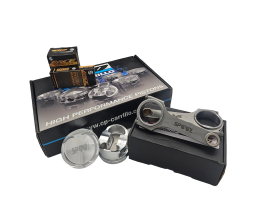
Why Your Piston Pin Choice Can Decide Whether Your Engine Lives or Dies
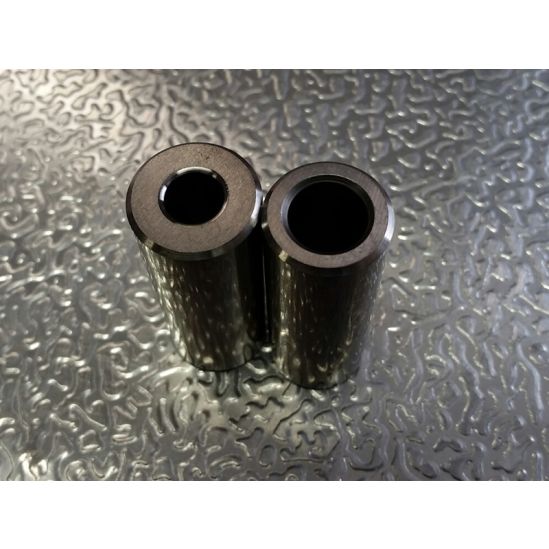
Piston Pin Upgrades: Why Gudgeon Pins Matter in High-Performance Engines
When people talk pistons, they focus on brand, compression ratio, coatings, and ring packs. Very few spend much time thinking about the piston pin.
That’s a mistake.
Because when piston pins fail, they don’t fail quietly — and the damage is usually catastrophic.
What a Piston Pin Actually Does
The piston pin (also known as the gudgeon pin) is the physical link between the piston, the conrod, and the crankshaft.
Its job is to:
- Support the piston under extreme cylinder pressure
- Control piston rock at TDC and BDC
- Transfer combustion forces into the conrod
In high-boost, high-RPM, or high-load engines, the piston pin is subjected to enormous bending and shear forces. If it flexes, everything downstream is compromised.
Most Pistons Come With a Basic Pin
Most off-the-shelf forged pistons are supplied with a standard:
- 5100 / 5115 steel piston pin
- .180" wall thickness
These pins are generally adequate for mild street engines and conservative power levels. Once cylinder pressure and RPM increase, the standard pin can quickly become a weak link.
Pin Flex: A Leading Cause of Piston Failure
Pin flex is one of the most common contributors to piston failure in high-output engines.
When a piston pin flexes excessively:
- The piston no longer remains square in the bore
- Skirt loading increases dramatically
- Ring seal is compromised
- Stress concentrates around the pin bosses
Over time, this leads to cracking, collapse, or complete piston failure.
When a Piston Pin Fails, the Damage Is Violent
If the piston fails and the gudgeon pin comes free, the conrod is no longer guided by the piston.
At that point, you have a free-swinging steel lever attached to a crankshaft spinning at thousands of RPM.
We’ve personally seen an engine where the piston failed, the pin came free, and the conrod turned into a machete. The rod itself was relatively intact, but it sliced through the starter motor like butter on its way out of the block.
The engine was scrap.
Common Piston Pin Materials and Wall Thicknesses
5100 / 5115 Steel – .180" Wall (Standard)
- Supplied with most shelf pistons
- Adequate for mild street engines
- Limited resistance to flex under extreme load
9310 Steel – .200" Wall
- Significant increase in strength and stiffness
- Much better resistance to bending
- Ideal for serious street and track applications
9310 Steel – .250" Wall (.240" for LS)
- Substantially stiffer again
- Excellent for high-boost and high-RPM engines
- Greatly reduces pin flex and piston instability
300M Tool Steel Piston Pins
- Extremely high tensile strength
- Outstanding fatigue resistance
- Designed for extreme cylinder pressure and abuse
300M pins are typically reserved for competition engines where maximum safety margin is required.
Why Wall Thickness Matters as Much as Material
Just like conrod bolts, piston pin wall thickness plays a major role in reliability.
Increasing wall thickness:
- Increases stiffness exponentially
- Reduces bending under peak cylinder pressure
- Keeps the piston square in the bore
A stiffer pin improves ring seal, reduces skirt wear, lowers stress on the pin bosses, and extends piston and bore life.
Material provides strength. Wall thickness provides stiffness. The best builds consider both.
Choosing the Right Piston Pin for Your Build
- Mild street engines: Standard .180" pins may be acceptable
- Serious street and track builds: 9310 .200" wall is a smart upgrade
- High-boost, high-RPM, or heavy piston combinations: 9310 .250" (.240" LS) is strongly recommended
- Extreme competition engines: 300M pins provide the highest safety margin
Compared to the cost of pistons, machining, assembly, and tuning, a piston pin upgrade is inexpensive insurance.
The Bottom Line
Piston pins don’t get the attention they deserve, but when they fail, the results are catastrophic.
Piston failure leads to loss of pin control. Once the conrod is free to swing, the engine is already lost.
At Spool Imports, we offer upgrades to:
- 9310 .200" piston pins
- 9310 .250" (.240" for LS) piston pins
- 300M piston pins
Because we’ve seen firsthand what happens when a pin isn’t up to the job.
FAQs: Piston Pins and Gudgeon Pin Upgrades
What is a piston pin or gudgeon pin?
A piston pin connects the piston to the conrod, allowing the piston to pivot as the crankshaft rotates while transferring combustion forces into the rod.
Why do piston pins fail?
Piston pins fail primarily due to excessive flex caused by high cylinder pressure, detonation, high RPM, or insufficient stiffness for the application.
Is piston pin flex really that dangerous?
Yes. Excessive pin flex can cause piston instability, cracked pin bosses, skirt failure, and eventual release of the pin, leading to catastrophic engine damage.
What is the difference between 5100, 9310, and 300M piston pins?
5100 is a standard steel used in most shelf pistons. 9310 offers higher strength and stiffness. 300M is a premium alloy designed for extreme load and fatigue resistance.
Does wall thickness matter more than material?
Both matter, but wall thickness has a major impact on stiffness. Increasing wall thickness significantly reduces bending under load.
Why do LS engines use .240" wall pins instead of .250"?
LS piston designs and pin bore dimensions typically require a slightly thinner wall while still achieving excellent stiffness and strength.
Is upgrading piston pins worth the cost?
Yes. Compared to the cost of an engine rebuild or block replacement, a piston pin upgrade is very inexpensive insurance.
Do Spool Imports pistons come with upgraded pins?
Spool Imports offers piston pin upgrades to 9310 and 300M materials. Standard shelf pistons typically include a .180" wall pin unless upgraded.