Why Your Choice of Conrod Bolts Might Be the Most Important Decision in Your Engine Build
Why Your Choice of Conrod Bolts Might Be the Most Important Decision in Your Engine Build
When people spec an engine build, they’ll argue piston brands, compression ratios, rod styles, and coatings for hours. But there’s one part that often gets overlooked — the humble conrod bolt.
Ironically, it’s also one of the most critical components in the entire rotating assembly.
Most Conrod Failures Start the Same Way
In the real world, most conrod failures don’t start with the rod itself. They usually begin with a bearing failure, oil starvation, or detonation.
Once a bearing fails, the big-end sees massive shock loading. At that point, the weakest link becomes the conrod bolt.
When the bolt stretches or fails:
- The cap separates
- The rod is no longer attached to the crank
- And the conrod immediately goes looking for daylight through the side of your block.
At that moment, it doesn’t matter how good your pistons, crank, or block were. The build is over.
Not All ARP Bolts Are Created Equal
ARP is the gold standard for fasteners, but the material grade matters — a lot. Here’s a quick breakdown of the common ARP bolt materials used in conrods.
ARP 8740
- Entry-level ARP material
- Common in cheaper conrods
- Adequate for mild builds, but limited safety margin
Spool Imports does not offer 8740 bolts in any of our conrods. If a conrod looks cheap compared to its competitors, this is often why.
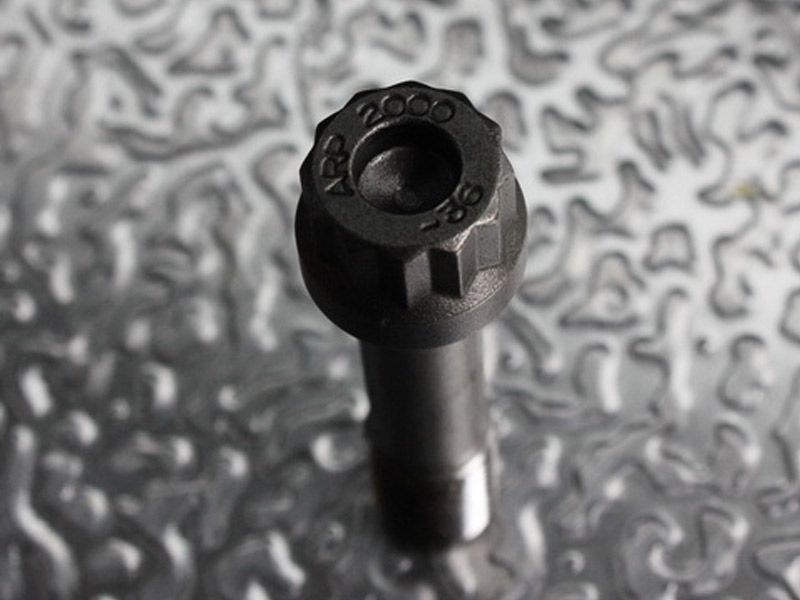
ARP 2000
- Major step up in strength over 8740
- Excellent fatigue resistance
- Suitable for serious street and track engines
This is the minimum bolt grade you should accept in a performance engine build.
ARP L19
- Higher tensile strength than ARP 2000
- Designed for extreme cylinder pressure and high RPM
- Common in drag and high-boost applications
L19 offers more clamp load but does require correct handling and installation due to its material properties.
ARP CA625+
- ARP’s premium conrod bolt material
- Exceptional tensile strength and fatigue resistance
- Ideal for sustained high-load, high-RPM environments
This is the choice when failure is not an option.
Bolt Material Is Critical — But Bolt Size May Be Even More Important
Here’s the part many people miss: bolt size often matters more than bolt material alone.
3/8" vs 7/16" Conrod Bolts
- Most H-Beam conrods use 3/8" bolts
- Larger H-Beam applications (LS, TD42, etc.) step up to 7/16" bolts
- All Spool Drag Pro Conrods use 7/16" bolts — even in engines like the SR20
A larger bolt has more cross-sectional area, can generate higher clamping force, and is more resistant to stretch under shock loads. That means better cap retention when things go wrong, which is exactly when you need it most.
Don’t Be Fooled by the Bolt Head Size
One common misconception is: “They both use a 7/16 socket, so they must be the same.” Not true.
Both 3/8" and 7/16" ARP bolts commonly use a 7/16" hex head. The socket size tells you nothing about the shank diameter or strength of the bolt.
Typical ARP Conrod Bolt Clamping Loads
Below is a simplified comparison showing how both material and bolt size affect clamp load. Exact values can vary depending on bolt length and specification, but these figures are representative.
| Bolt Material | 3/8" Bolt Clamp Load | 7/16" Bolt Clamp Load |
|---|---|---|
| ARP 8740 | ~8,000 – 8,500 lbs | ~10,500 – 11,000 lbs |
| ARP 2000 | ~9,500 – 10,000 lbs | ~13,000 – 14,000 lbs |
| ARP L19 | ~10,500 – 11,000 lbs | ~15,000 – 16,000 lbs |
| ARP CA625+ | ~11,500 – 12,000 lbs | ~17,000 – 18,000 lbs |
The takeaway is simple:
- A 7/16" ARP 2000 bolt can outperform a 3/8" L19
- Size and material work together — not independently
What This Means for Your Engine Build
When choosing conrods:
- Never judge value by price alone
- Always check bolt material
- Always check bolt diameter
- Assume that if the bolts are compromised, everything else is at risk
At Spool Imports:
- All Spool conrods come standard with ARP 2000 bolts
- L19 upgrades are available across the range
- CA625+ bolts are available for applicable H-Beam configurations
- Drag Pro Conrods use 7/16" bolts as standard, even in smaller engines
Because when something goes wrong inside an engine — the bolt is usually the last line of defence.
FAQs: Conrod Bolts, Bolt Grades, and Bolt Size
Are conrod bolts really that important?
Yes. When a bearing fails or detonation occurs, the shock load often targets the big-end fasteners. If a conrod bolt stretches or fails, the rod cap can separate and the rod can exit the block.
What’s the minimum ARP bolt grade I should accept in performance conrods?
As a general rule, you should be looking for at least ARP 2000 in a performance engine build. If a conrod is cheaper than comparable options, check the bolt material carefully.
What’s the difference between ARP 2000, L19, and CA625+?
They are different ARP materials with increasing strength and fatigue resistance. ARP 2000 is a strong all-round performance bolt. L19 is higher strength for higher cylinder pressure and RPM. CA625+ is a premium option for extreme use where maximum safety margin is required.
Is bolt size more important than bolt material?
In many builds, yes. A larger bolt (for example 7/16" vs 3/8") has more cross-sectional area and can provide higher clamping force and better resistance to stretch. Material and size should be considered together.
Do 3/8" and 7/16" bolts use different socket sizes?
Not always. It’s common for both ARP 3/8" and 7/16" bolts to use a 7/16" hex head. The head size does not confirm the bolt’s shank diameter.
Why do conrod bolts fail after a bearing failure?
When a bearing fails, oil film is lost and the big-end can experience sudden friction and shock loads. The bolt can stretch, lose clamping force, and ultimately fail, allowing the cap to separate.
How do I know if a conrod is “cheap” because of the bolts?
Ask what bolt material is included and whether upgrades are available. If the bolt grade is not clearly stated, that is often a warning sign. In many cases, low pricing is achieved by using lower-grade fasteners.
Do Spool Imports conrods use 8740 bolts?
No. Spool Imports does not offer 8740 bolts in any of our conrods. Spool conrods come standard with ARP 2000 bolts, with L19 upgrades available, and CA625+ available for applicable configurations.