If your LS1 is coming apart, a stroker kit can be tempting. You are already paying for machining and assembly, so adding capacity seems like the obvious next step. Sometimes it is. But a good standard-stroke rebuild can still be the better use of the budget, particularly if the crankshaft is serviceable and the engine already has enough capacity for the way you use the car.
The important distinction is that a 383 and a 408 are not simply two crankshaft options for the same LS1 block. A typical 383-style LS1 combination uses a 4.000-inch stroke with a much smaller bore than a 408. Getting to 408 cubic inches requires the right larger-bore block or a properly engineered sleeved combination.
Start with the block you actually have, its condition and the way you want the engine to drive. Then choose the crankshaft, rods and pistons together. That is far more useful than buying a kit because the capacity in its name sounds right.
When staying with standard stroke makes sense
The factory LS1 has a nominal 3.898-inch bore and 3.622-inch stroke. Keeping that stroke does not mean keeping every original component. You can build around suitable forged pistons and stronger rods while retaining a serviceable crankshaft, provided its condition and specification suit the intended engine.
That route makes sense when you want a sound performance rebuild without paying for extra capacity you do not really need. Money saved on a crankshaft can go towards machining, cylinder heads, the valvetrain, fuel delivery or tuning. Those parts still determine how well the finished combination works.
A standard-stroke engine is not automatically more reliable, and a stroker is not automatically stronger. Component selection, clearances, assembly quality and how the engine is operated matter in either case. Reusing a damaged crankshaft to save money is a different decision from retaining a good one after proper inspection.
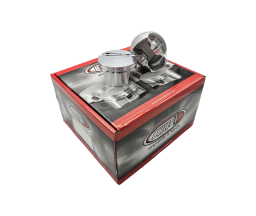
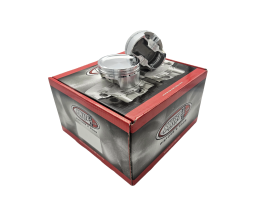
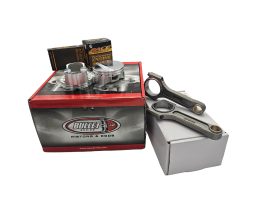
Spool's 3.622-inch-stroke rebuild package combines Spool conrods, CP Bullet forged pistons and associated rebuild components. It is a parts package for the selected combination, rather than a promise that every bore or piston option suits every LS block. A crankshaft is not listed among its inclusions.
What a 383-style stroker changes
A longer stroke makes each piston travel further, increasing the volume the engine sweeps through on every cycle. With the heads, camshaft, intake and exhaust matched to it, that extra capacity can help produce more torque through the rev range you actually use. That is often the attraction in a street car: more response without relying entirely on extra engine speed.
It is not a fixed horsepower gain. If the rest of the engine cannot move enough air, extra capacity alone will not produce the result you expected. The camshaft and cylinder-head combination still need to suit the intended operating range.
One established LS1-style combination is a 3.905-inch bore with a 4.000-inch stroke, which calculates to about 383 cubic inches. CP lists pistons for that bore and stroke, but the availability of the piston does not establish that your used block will clean up at that bore. Have the block measured before ordering.
The longer stroke also changes what happens inside the engine. At the same RPM, the piston travels further each minute. There is also less room for the rotating parts to pass the block and each other. Those are reasons to choose the operating range sensibly and trial-assemble the combination, rather than treating a stroker as a crankshaft swap.
Why a 408 needs a different bore
A common 408 combination uses a 4.030-inch bore and a 4.000-inch stroke. That is a larger bore than an ordinary LS1 stock-sleeve build. It is usually a discussion about an appropriate larger-bore LS block, or a specifically engineered sleeved block, rather than simply boring an LS1 until the numbers add up.
Even a 6.0-litre block is not automatically cleared for the required finished bore. Its casting, condition, previous machining and the builder's assessment determine the sensible limit. Do not use a piston catalogue as an overbore specification for the block.
The figures below show why the bore matters just as much as the stroke. They are calculated examples, not machining recommendations.
| Combination | Bore | Stroke | Calculated capacity |
|---|---|---|---|
| Standard-stroke rebuild example | 3.905 in | 3.622 in | 347.0 cu in / 5.69 L |
| 383-style combination | 3.905 in | 4.000 in | 383.3 cu in / 6.28 L |
| 4.000-inch-bore stroker | 4.000 in | 4.000 in | 402.1 cu in / 6.59 L |
| 408-style combination | 4.030 in | 4.000 in | 408.2 cu in / 6.69 L |
These examples also explain why “standard stroke” does not necessarily mean the original displacement. If the bore changes during a rebuild, capacity changes with it. Use the finished bore and actual stroke when describing the engine or calculating compression.
The pistons must match the stroke and rods
A stroker piston is not simply a standard piston made stronger. The position of its gudgeon pin must suit the longer stroke and the chosen rod length so the piston reaches the correct height in the bore.
The distance from the centre of the gudgeon pin to the top of the piston is called compression height. With the same rod length, a longer stroke generally needs a shorter compression height. Otherwise, the crank tries to push the piston too far out of the bore at the top of its travel.
For example, CP's BLS1001-007 specification pairs a 3.905-inch bore and 3.622-inch stroke with a 6.125-inch rod and 1.300-inch compression height. Its BLS1002-007 specification uses the same bore and rod length with a 4.000-inch stroke and 1.110-inch compression height. Those are two specific matched combinations, not interchangeable pistons.
The 6.125-inch rod in those examples is an aftermarket specification. Do not assume it is the length of the original LS1 rod, or that a piston intended for it will work with whatever rods are already on the bench.
The engine builder must also establish where the piston sits relative to the block deck, the flat surface that meets the cylinder head. Previous deck machining changes that relationship. Piston crown shape, combustion-chamber volume and head-gasket dimensions then affect compression ratio and piston-to-head clearance. Valve pockets must suit the heads and camshaft, with piston-to-valve clearance measured during assembly.
This is why ordering from bore size and a quoted compression ratio alone can go wrong. Spool's LS Piston Finder helps narrow the available combinations, but the final selection needs the builder's actual measurements.
Choose the package for the parts you need
There is an important difference between a stroker rebuild kit and a rotating assembly that includes the crankshaft.
The Spool 4.000-inch-stroke rebuild kit explicitly excludes the crankshaft. It is useful when the correct crank is already part of the build. Buying it does not convert a standard-stroke crank into a stroker.
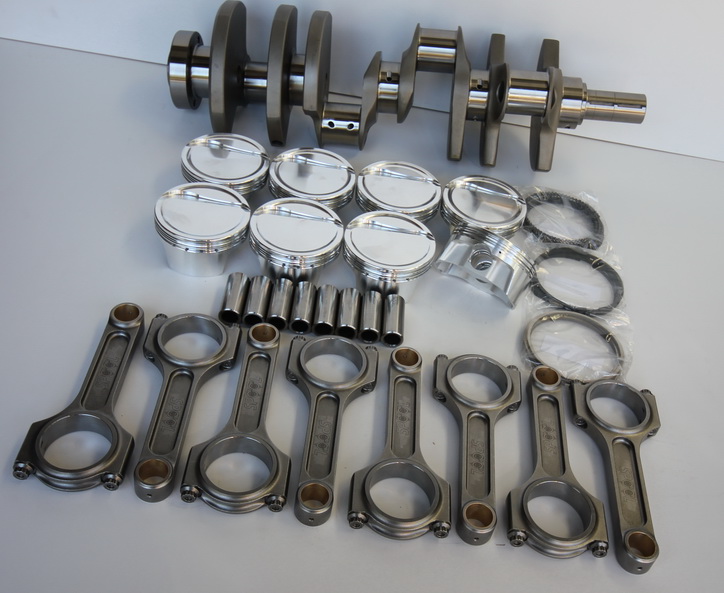
The crank-inclusive 4.000-inch rotating assembly supplies the crank, 6.125-inch H-beam rods and selected CP Bullet pistons with rings, pins and locks. Bearing choices are separate selections, including options without bearings. Do not assume it has the same inclusions as a rebuild package with bearings and head gaskets.
Spool offers these combinations using its own conrods and crankshaft range alongside CP pistons. The useful choice is the package that matches the block and the parts being retained, rather than the one with the longest list of inclusions.
The crank has to work with the car as well as the block
The engine-management system needs the correct crankshaft position signal. The toothed wheel on the crank, called the reluctor, must work with the crank sensor and ECU arrangement. A 24-tooth and a 58-tooth system are not interchangeable merely because the crankshaft fits the engine.
The listed Spool crank-inclusive assembly does not come with a reluctor fitted. Its options include different reluctor choices, so establish the actual engine-control combination before ordering. This is particularly important in an engine-swapped car, where the engine, wiring and ECU may no longer match the original vehicle.
Also identify the crank's rear flange and the required flywheel or flexplate arrangement. LS-family parts have variations, and “suits LS” is not enough information to establish that every component will bolt together.
Allow for balancing and trial assembly
A matched list of parts is the start of the job. The machine shop still needs to balance the actual rotating assembly and measure the journals, bearing clearances and crankshaft end float. Piston and pin weights, rod weights and the other rotating components all matter to the balancing work.
During trial assembly, the builder checks that the crank counterweights, rods and bolts pass the block and other parts with the required clearance throughout rotation. Different crank designs can need different amounts of room. Spool's full-counterweight LS crank guide covers that particular clearancing issue in more detail; it should not be treated as a universal machining pattern for every LS crank.
Cylinder finish, piston clearance and ring gaps also belong to the selected piston and ring package and the intended use. Follow the instructions supplied with those parts. A naturally aspirated street build and a heavily loaded boosted engine should not inherit the same assembly settings simply because both are called a 383.
Which route would we choose?
If the existing crank is suitable and you mainly want a properly built engine for a sensible street combination, start by pricing a standard-stroke rebuild. It can leave more of the budget available for the work and supporting parts that make the engine enjoyable and dependable.
If you want more capacity and mid-range response, and the engine is already being built from the bottom up, a correctly specified 383-style combination is worth comparing. Include the crankshaft, balancing, any clearancing and the rest of the engine specification in that comparison.
If the goal is a 408, settle the block choice first. Do not buy the rotating assembly on the assumption that the LS1 block will somehow accommodate it afterwards.
When asking Spool about a combination, tell us the block being used, measured or proposed finished bore, crank stroke, cylinder heads, fuel and intended use. Include the parts you already own and the ECU or reluctor arrangement. That gives us and your engine builder a useful starting point for selecting parts that belong together.
Frequently asked questions
Does an LS1 need a stroker kit when it is rebuilt?
No. A standard-stroke rebuild can be the sensible choice when the crankshaft is suitable and the engine's capacity meets the intended use. A stroker adds capacity, but it also changes the parts combination and machining requirements.
Does a 4.000-inch crank make every LS engine a 408?
No. Capacity depends on bore as well as stroke. A 3.905-inch bore with a 4.000-inch stroke is about 383 cubic inches; a 408-style combination uses approximately a 4.030-inch bore with that stroke.
Can I use standard-stroke LS pistons with a stroker crank?
Do not assume they are compatible. Piston compression height must match the crank stroke, rod length and measured block-deck relationship. A longer stroke generally needs a shorter compression height when the rod length stays the same.
Does the Spool stroker rebuild kit include a crankshaft?
The listed 4.000-inch-stroke rebuild kit excludes the crankshaft. The separate crank-inclusive rotating assembly includes one, but its bearing and reluctor selections must still be specified for the build.