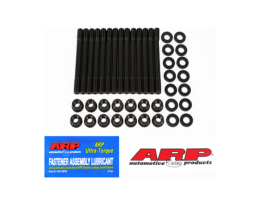
The Truth About Head Studs for High-Boost Engines | 8740 vs ARP2000 vs L19 vs CA625+
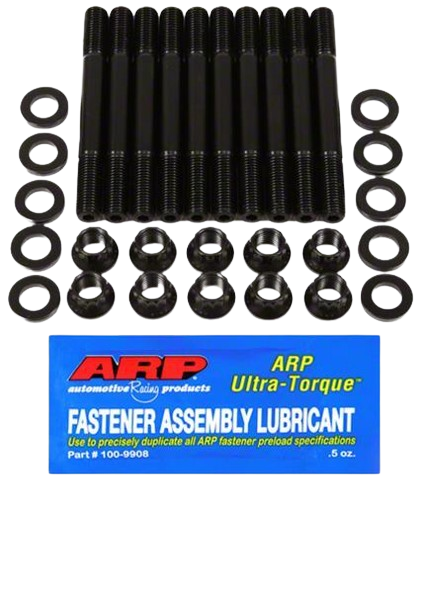
The Truth About Head Studs for High-Boost Engines
Once boost pressure starts climbing, the cylinder head becomes one of the most heavily stressed parts of the engine. Cylinder pressure rises dramatically, combustion force increases, and the head gasket suddenly has to contain forces far beyond what the factory engineers originally intended.
This is where head fasteners become critically important.
Many enthusiasts focus heavily on turbo size, pistons, rods and fuel systems, but the reality is simple:
If the cylinder head cannot stay clamped to the block properly, the engine will eventually fail.
Whether the result is coolant pressurisation, combustion leakage, head lift or complete gasket failure, insufficient clamping force becomes a major problem once cylinder pressure increases.
This is why serious high-performance turbo engines almost always use upgraded head studs.
In this guide, we explain:
- why factory head bolts fail
- how head studs improve clamping force
- ARP2000 vs L19 vs CA625+
- corrosion issues with L19
- MLS gasket sealing requirements
- bore distortion and torque plate honing
- why stronger is not always automatically better
- correct torque procedures
Why Factory Head Bolts Fail
Most factory engines use torque-to-yield head bolts. These bolts are designed around the original factory power level, combustion pressure, emissions targets and service life expectations.
For a standard naturally aspirated engine or mild turbo application, factory bolts may work perfectly well. Problems start when:
- boost pressure increases
- cylinder pressure rises dramatically
- combustion temperatures increase
- RPM increases
- detonation events occur
- larger turbochargers are fitted
- nitrous oxide is added
Under these conditions, the cylinder head can physically lift away from the block during combustion events.
This is commonly referred to as head lift.
Even extremely small movement between the cylinder head and block can compromise head gasket sealing.
Once combustion pressure starts escaping:
- the MLS gasket can lose sealing integrity
- coolant systems become pressurised
- combustion gases enter coolant passages
- coolant contamination can occur
- the head gasket eventually fails completely
In many high-boost engines, the factory head bolts simply do not provide enough consistent clamping force to prevent this.
What Makes Head Studs Better?
Head studs improve cylinder head clamping in several important ways.
| Feature | Head Stud Advantage |
|---|---|
| Clamping force | Higher and more consistent clamping load |
| Thread engagement | Improved block thread loading |
| Fastener stretch control | More predictable clamping accuracy |
| Repeated servicing | Reduced thread wear in the block |
| MLS gasket sealing | Improved sealing stability under boost |
Unlike a bolt, which twists during tightening while also pulling against the block threads, a stud is installed into the block first. The nut then applies clamping force separately.
This generally creates:
- more accurate preload
- more consistent clamping force
- reduced fastener friction variation
- improved sealing stability
For serious turbocharged engines, this additional clamping consistency becomes extremely important.
What Is Clamping Force?
Clamping force is the amount of load holding the cylinder head against the engine block.
Every combustion event attempts to lift the cylinder head away from the block surface. The head fasteners must provide enough preload to resist that force.
As boost pressure rises, combustion force increases dramatically.
For example:
- a mild street turbo engine may generate manageable cylinder pressure
- a high-boost drag engine may generate enormous cylinder pressure spikes
- detonation events can create instantaneous pressure spikes far beyond normal combustion loads
If the fastener cannot maintain sufficient clamping load under those conditions, the head gasket seal becomes unstable.
MLS and Cut Ring Head Gaskets
Most modern high-performance engines use MLS (Multi-Layer Steel) head gaskets, but in extreme cylinder pressure applications some builders move toward cut ring gasket systems.
Cut ring head gaskets use a stainless sealing ring around the cylinder bore to create additional combustion sealing capability under very high boost pressure.
One of the best-known examples is the Athena cut ring gasket range commonly used in serious turbocharged performance engines.
Cut ring systems are often seen in:
- very high boost drag engines
- four-digit horsepower combinations
- engines that have exceeded the sealing capability of a conventional MLS setup
However, even the best cut ring gasket still depends heavily on:
- proper surface finish
- correct machining
- stable head clamping
- appropriate fastener preload
A cut ring gasket is not a substitute for poor machining or insufficient fastener control.
MLS Head Gaskets and Why Clamping Matters
Most modern high-performance engines use MLS (Multi-Layer Steel) head gaskets.
MLS gaskets seal by using multiple embossed stainless steel layers that rely heavily on correct and stable clamping force.
Unlike older composite gaskets, MLS gaskets generally require:
- excellent surface finish
- stable head clamping
- minimal head movement
- proper fastener preload
- accurate machining
An MLS gasket does not tolerate head lift well.
This is one reason upgraded head studs become so important in modern turbo engines using MLS gaskets.
ARP2000 vs L19 vs CA625+
One of the most common questions in performance engine building is:
Which head stud material should I choose?
The answer depends on:
- boost pressure
- power level
- fuel type
- engine platform
- detonation risk
- intended use
- maintenance expectations
The three most common premium performance stud materials are:
- 8740
- ARP2000
- L19
- CA625+
8740 Head Studs
Before stepping into ARP2000, L19 or CA625+, it is important to mention 8740 chromoly head studs.
8740 is a widely used performance fastener material and is commonly found in entry-level and moderate-performance stud kits.
For many mild to moderate performance builds, 8740 can provide a substantial improvement over factory torque-to-yield bolts.
8740 head studs are commonly used in:
- mild turbo upgrades
- basic forged street engines
- lower boost combinations
- engines where premium stud materials are not available
Some engine platforms only have limited fastener options available, meaning 8740 may be the primary upgrade path.
However, once cylinder pressure and boost levels become aggressive, many serious engine builders move toward ARP2000, L19 or CA625+ for increased clamping capability and fatigue resistance.
ARP2000 Head Studs
ARP2000 is one of the most widely used performance fastener materials in the industry.
For many street and performance turbo builds, ARP2000 provides an excellent balance of:
- strength
- reliability
- corrosion resistance
- service life
- cost effectiveness
ARP2000 is commonly used successfully in:
- Barra engines
- 2JZ engines
- RB engines
- LS turbo builds
- street and strip combinations
For many enthusiasts, ARP2000 is more than sufficient for the intended power level.
L19 Head Studs
L19 is a significantly stronger fastener material than ARP2000 and is commonly used in more aggressive high-boost combinations.
L19 provides:
- higher tensile strength
- greater clamping capability
- improved resistance to head lift under extreme cylinder pressure
However, L19 also comes with important considerations.
L19 Corrosion Issues
L19 material is more susceptible to corrosion and hydrogen embrittlement than ARP2000.
This means L19 fasteners require:
- careful handling
- proper storage
- protection from moisture exposure
- careful maintenance procedures
In humid environments or engines exposed to moisture contamination, corrosion can become a serious issue if the fasteners are not maintained correctly.
This is why L19 is often viewed as a more race-oriented fastener rather than an ideal low-maintenance street fastener.
Because of these maintenance and corrosion considerations, Spool Imports does not actively stock L19 head stud kits as part of the normal fastener range. In many cases, ARP2000 or CA625+ provide a more practical and reliable solution depending on the intended application.
For dedicated race engines that are inspected and maintained regularly, L19 can be extremely effective. For long-term street reliability, many builders prefer either ARP2000 or CA625+ depending on the power level.
CA625+ Head Studs
CA625+ is generally considered one of the premium extreme-duty fastener materials available for high-performance engines.
CA625+ offers:
- extremely high tensile strength
- excellent fatigue resistance
- excellent corrosion resistance
- very stable clamping under severe cylinder pressure
CA625+ is commonly used in:
- extreme turbocharged engines
- very high boost applications
- high-end drag racing engines
- engines with severe cylinder pressure demands
However, there is an important point many people overlook:
Very high clamping force can physically distort the engine block and cylinder bores.
Bore Distortion and Torque Plate Honing
As cylinder head clamping force increases, the engine block itself can deform slightly.
This is especially important with:
- high-tensile head studs
- large stud diameters
- high torque values
- thin-wall engine blocks
- high cylinder pressure applications
When extremely strong fasteners such as CA625+ are torqued, the cylinder bores can distort from their relaxed shape.
This matters because bore distortion affects:
- ring seal
- piston stability
- oil control
- cylinder sealing efficiency
- engine wear
This is one reason professional engine builders use torque plate honing.
What Is Torque Plate Honing?
Torque plate honing simulates the stress the cylinder head places on the block during final assembly.
A torque plate is bolted to the block using the intended head studs and torque procedure before final honing is performed.
This allows the cylinders to be honed in their distorted operating state rather than their relaxed unloaded state.
Without torque plate honing, the cylinder may become slightly out-of-round once the head is installed and torqued.
As clamping loads increase with stronger studs such as CA625+, torque plate honing becomes even more important.
Why Stronger Is Not Always Automatically Better
Many enthusiasts assume the strongest available stud is always the best choice.
In reality, the engine must be viewed as a complete system.
Factors that matter include:
- block rigidity
- cylinder wall thickness
- head gasket design
- surface finish quality
- cylinder pressure
- fuel type
- head casting rigidity
- engine operating temperature
Using an extreme fastener without proper machining and preparation can sometimes create new problems instead of solving existing ones.
The correct fastener choice depends on the actual engine combination and intended use.
Correct Torque Procedures Matter
Even the best head studs will not perform correctly if the torque procedure is wrong.
Proper fastener preload depends heavily on:
- thread condition
- lubricant type
- washer condition
- torque sequence
- torque increments
- fastener stretch characteristics
One important point often overlooked is that torque is only an indirect method of measuring preload.
Friction has a major effect on the final clamping load achieved.
This is why premium fastener manufacturers specify:
- specific lubricant types
- specific torque values
- specific tightening sequences
- specific re-torque procedures where required
Changing lubricant or torque procedure can significantly alter the actual preload achieved.
Importance of Surface Finish
MLS gaskets rely heavily on surface finish quality.
If the block deck or cylinder head surface finish is too rough, the gasket may struggle to seal properly regardless of the stud material used.
Critical factors include:
- surface roughness average (RA)
- deck flatness
- head flatness
- machining quality
- head and block rigidity
A premium head stud cannot compensate for poor machining.
Real-World High-Boost Examples
Ford Barra
High-boost Barra engines commonly upgrade from factory bolts to ARP2000, L19 or CA625+ depending on the power level and intended use.
At very high boost levels, maintaining stable MLS gasket sealing becomes critical, particularly on engines making four-digit horsepower.
Toyota 2JZ
The 2JZ is famous for bottom-end strength, but extreme boost still places huge demand on head clamping. Proper surface finish, correct stud selection and torque procedures are critical in high-horsepower JZ combinations.
Nissan RB26
RB engines are well known for head sealing sensitivity at elevated boost levels. Proper clamping force, block preparation and gasket selection become increasingly important as cylinder pressure rises.
GM LS Turbo Engines
Boosted LS engines often transition to upgraded studs quickly once power levels increase. Bore distortion and block rigidity considerations become important in high-power combinations.
Quick Comparison: ARP2000 vs L19 vs CA625+
| Fastener Material | Main Strength | Main Consideration | Typical Use |
|---|---|---|---|
| 8740 | Good upgrade over factory bolts | Limited ultimate clamping capability compared with premium materials | Mild to moderate performance applications |
| ARP2000 | Excellent all-round performance and durability | May not be enough for the most extreme cylinder pressure levels | Street and performance turbo builds |
| L19 | Higher clamping capability | Corrosion sensitivity and maintenance requirements | Aggressive high-boost and race applications |
| CA625+ | Extreme strength and corrosion resistance | Can increase bore distortion and requires proper machining strategy | Extreme boost and elite motorsport applications |
Where Spool Imports Fits In
Spool Imports supplies a wide range of performance head stud kits for popular engine platforms including Ford Barra, Toyota JZ, Nissan RB, GM LS and many others.
Depending on the application, kits are available in:
- 8740
- ARP2000
- CA625+
The correct choice depends on the intended boost level, fuel type, power target and use case.
For many street and performance builds, ARP2000 provides excellent reliability and sealing performance. For more extreme combinations, L19 and CA625+ offer increased clamping capability where cylinder pressure demands become much more severe.
Frequently Asked Questions
Why do factory head bolts fail in high-boost engines?
Factory bolts are designed around factory cylinder pressure levels. Increased boost creates much higher combustion pressure, which can cause head lift and loss of gasket sealing.
Are head studs better than head bolts?
For high-performance turbo engines, head studs generally provide more accurate preload and more stable clamping force than bolts.
What causes head lift?
Head lift occurs when combustion pressure exceeds the clamping force holding the cylinder head against the block.
Are 8740 head studs enough for a turbo engine?
For many mild to moderate turbo applications, 8740 studs can provide a significant improvement over factory bolts. However, serious high-boost engines often benefit from stronger fastener materials such as ARP2000 or CA625+.
What is the difference between ARP2000 and L19?
L19 offers higher tensile strength and clamping capability than ARP2000, but it is also more susceptible to corrosion and requires more careful maintenance.
Why is CA625+ used in extreme engines?
CA625+ offers extremely high strength, excellent fatigue resistance and strong corrosion resistance, making it suitable for very high cylinder pressure applications.
Can stronger head studs distort the cylinder bores?
Yes. Higher clamping loads can distort the block and cylinders slightly, which is why torque plate honing is important in serious performance engine builds.
What is torque plate honing?
Torque plate honing uses a simulated cylinder head load during honing so the cylinders are machined in their stressed operating condition.
Do MLS head gaskets require head studs?
Not always, but MLS gaskets rely heavily on stable clamping force and surface finish quality, which makes upgraded studs very beneficial in high-boost applications.
Buy genuine ARP fasteners from an Australian direct supplier
Spool Imports purchases genuine ARP fasteners directly from ARP and supplies enthusiasts, engine builders and workshops across Australia from Ormeau, Queensland. Our technical advice is backed by practical experience supplying ARP hardware for performance engine builds.
Shop ARP fasteners at Spool Imports or browse our ARP head stud kits. Our online listings are a selected range. If your ARP part number is not shown, request price and availability with the part number, quantity and application. We can enquire directly with ARP about other catalogue parts and confirm expected lead time before ordering.
Locally held stock and parts ordered from ARP have different availability. Always check the exact kit number and follow its current installation instructions. Trade accounts are available, and Spool Imports is a Capricorn Preferred Supplier.
Final Thoughts
Head studs are one of the most important upgrades in any serious high-boost engine build.
Once cylinder pressure rises, maintaining stable and consistent head clamping becomes critical for MLS gasket sealing and long-term engine reliability.
8740, ARP2000, L19 and CA625+ all have their place depending on the application. The correct choice depends on the complete engine combination, not simply the highest advertised strength number.
Just as importantly, the surrounding machining and assembly process matters enormously. Surface finish quality, torque procedures, torque plate honing and overall engine preparation all play a major role in sealing success.
If you are building a high-performance Barra, JZ, RB, LS or other turbocharged engine, Spool Imports can help with the correct head stud solution for your power level and intended use.