Different Head Gasket Types Explained | OEM vs MLS vs Cut Ring vs Copper vs Fire Ring
Different Head Gasket Types Explained
Head gaskets are one of the most misunderstood parts of a high-performance engine build.
Many enthusiasts assume there is a single “best” head gasket for every application, but the reality is far more complicated. The correct gasket depends on:
- boost pressure
- cylinder pressure
- fuel type
- surface finish
- head clamping force
- engine block rigidity
- machining quality
- intended use
A mild street engine and a four-digit horsepower drag engine do not place the same demands on the gasket.
Modern performance engines now use several different gasket technologies, including:
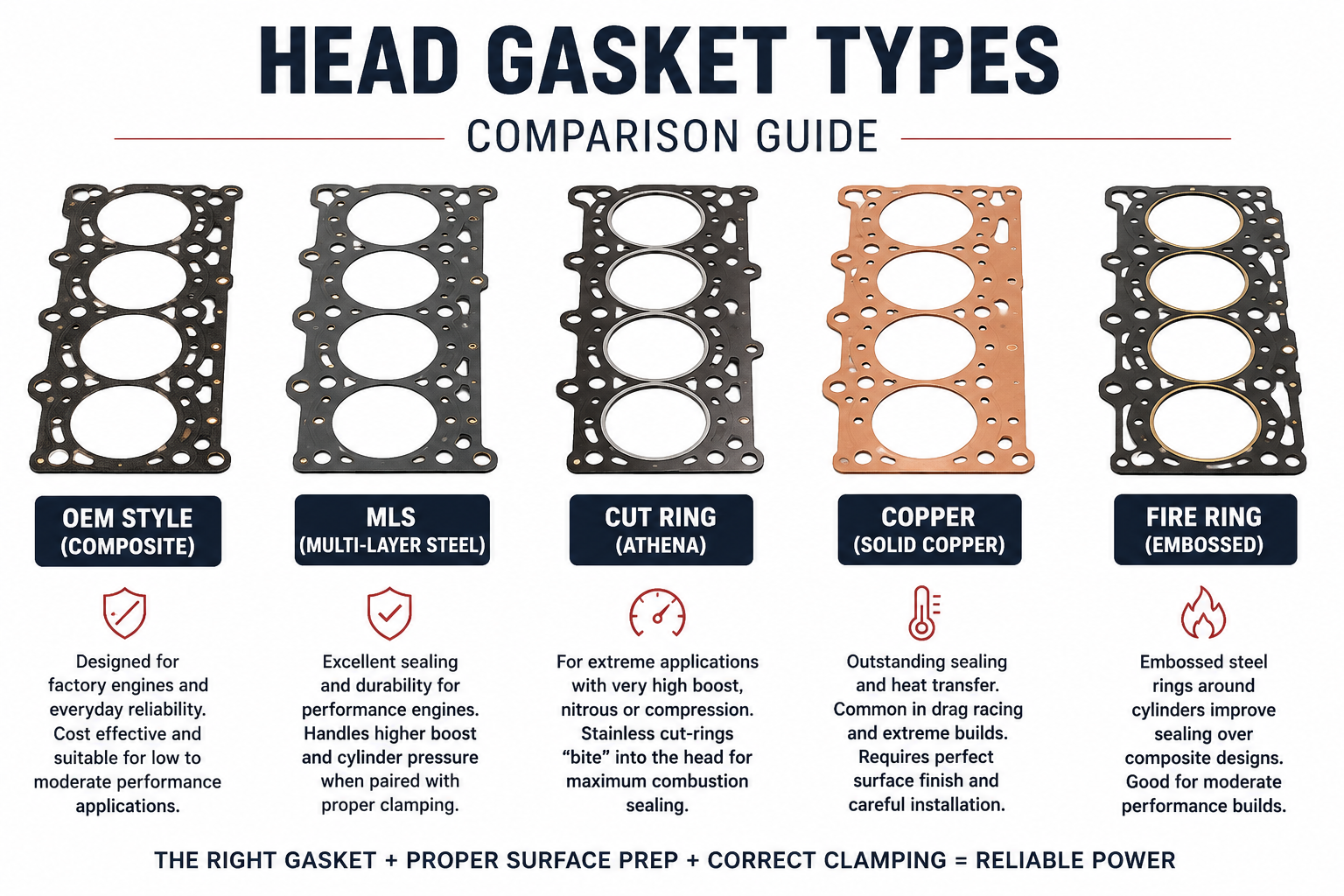
- OEM composite gaskets
- MLS (Multi-Layer Steel) gaskets
- cut ring gaskets
- copper head gaskets
- fire ring systems
Each has advantages, limitations and ideal use cases.
In this guide, we explain the major head gasket types, how they work, where they perform best, and what you should consider when building a serious turbocharged or high-performance engine.
What Does a Head Gasket Actually Do?
The head gasket sits between the engine block and cylinder head.
Its job is to seal three critical systems simultaneously:
- combustion pressure
- coolant passages
- oil passages
That sounds simple, but the environment is extremely hostile.
During combustion, the gasket is exposed to:
- extreme cylinder pressure
- rapid heat cycling
- block and head movement
- detonation events
- clamping force variation
As boost pressure rises, these stresses increase dramatically.
Once combustion pressure exceeds the gasket’s sealing capability, problems begin:
- coolant pressurisation
- combustion leakage
- head lift
- coolant contamination
- complete gasket failure
OEM Composite Head Gaskets
Traditional OEM-style composite gaskets are still common in many factory engines.
These gaskets usually use:
- a perforated steel core
- composite sealing material
- integrated combustion sealing rings
Composite gaskets are designed primarily around:
- factory power levels
- quiet operation
- thermal compliance
- long service life
- production manufacturing tolerances
Advantages of OEM Composite Gaskets
- good coolant and oil sealing
- more forgiving on surface finish
- lower cost
- good thermal compliance
- suitable for standard engines
Limitations of OEM Composite Gaskets
- limited combustion sealing under high boost
- less resistant to head lift
- less suitable for high cylinder pressure
- not ideal for serious forced induction
For mild turbo upgrades they may survive, but once cylinder pressure becomes aggressive, composite gaskets often become the weak point.
MLS (Multi-Layer Steel) Head Gaskets
MLS gaskets are now the standard choice for most serious modern performance engines.
MLS stands for Multi-Layer Steel.
These gaskets use multiple embossed stainless steel layers that work together to maintain combustion sealing under high load.
The embossed sealing layers act like springs, helping maintain contact pressure as the engine expands, contracts and moves during operation.
Advantages of MLS Gaskets
- excellent combustion sealing
- high boost capability
- excellent heat resistance
- good long-term durability
- ideal for modern turbo engines
Limitations of MLS Gaskets
- requires excellent surface finish
- less forgiving of machining issues
- sensitive to head lift
- requires stable clamping force
MLS gaskets rely heavily on:
- surface finish quality
- head stud preload
- block rigidity
- minimal head movement
When all those factors are correct, MLS gaskets can support extremely high power levels.
Cometic MLS Head Gaskets
One of the best-known MLS gasket manufacturers in the performance industry is Cometic.
Cometic MLS head gaskets are widely used in:
- Barra engines
- 2JZ engines
- RB engines
- LS engines
- Subaru EJ engines
- Honda K-series engines
Cometic gaskets are available in multiple bore sizes and thicknesses, allowing engine builders to tailor:
- compression ratio
- quench clearance
- combustion chamber setup
For many high-performance street and race engines, a properly installed MLS gasket such as a Cometic provides an excellent balance of sealing capability and long-term reliability.
Cut Ring Head Gaskets
As cylinder pressure rises beyond the capability of many standard MLS gaskets, some engine builders move toward cut ring gasket systems.
Cut ring gaskets use a solid stainless sealing ring around the combustion chamber to create a much stronger combustion seal.
The cut ring physically bites into the cylinder head under clamp load, forming a positive sealing barrier against combustion leakage.
This creates significantly greater resistance to:
- head lift
- combustion leakage
- extreme cylinder pressure
- very high boost levels
Athena Cut Ring Head Gaskets
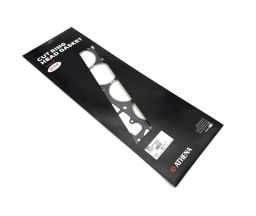
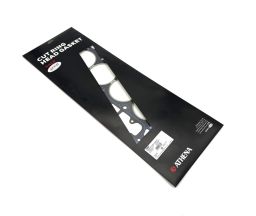
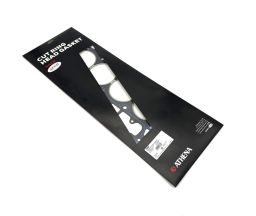
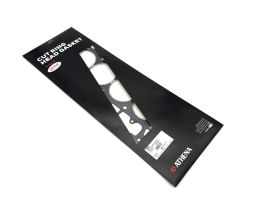
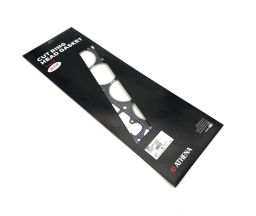
One of the most recognised cut ring systems in the performance market is the Athena Cut-Ring head gasket range.
Athena Cut-Ring gaskets use a hybrid sealing design that combines features of both composite and stainless sealing technologies.
Athena Cut Ring Design Features
| Feature | Purpose |
|---|---|
| Composite gasket body | Provides excellent coolant and oil sealing without additional sealant |
| Perforated metal core | Improves gasket stability and structural integrity |
| Solid stainless cut rings | Bite into the cylinder head to create a positive combustion seal |
| No additional machining required | Simplifies installation compared with some fire ring systems |
Athena Cut-Ring gaskets are specifically designed for engines with:
- high static compression
- turbocharging
- supercharging
- nitrous oxide
- extreme cylinder pressure
They are particularly effective on engine platforms prone to combustion sealing issues when using conventional MLS or composite gaskets.
This is especially common in:
- BMW engines
- Subaru EJ engines
- Toyota engines
- Chevrolet LS engines
- 4-bolt-per-cylinder engine designs
Athena Cut Ring Sealing Capability
According to Athena, the sealing capability of the Cut-Ring system exceeds:
- 16:1 static compression ratio
- 35 psi of turbocharged or supercharged boost pressure
- 250 shot nitrous oxide applications
That level of sealing capability makes Athena Cut-Ring gaskets popular in serious drag, roll racing and high-horsepower street applications.
Do Cut Ring Gaskets Require Machining?
One major advantage of Athena Cut-Ring gaskets is that the stainless cut ring bites into the cylinder head under clamp load without requiring separate receiver groove machining.
This simplifies installation compared with some traditional fire ring systems.
However, surface finish, clamping force and overall machining quality still remain extremely important.
A cut ring gasket is not a substitute for:
- poor machining
- insufficient clamping force
- head lift
- detonation problems
- poor tuning
Copper Head Gaskets
Copper head gaskets are commonly associated with older race engines and extreme custom applications.
Solid copper gaskets provide excellent heat transfer and can tolerate very high combustion temperatures.
However, copper gaskets generally do not seal fluids as effectively on their own.
Advantages of Copper Head Gaskets
- excellent heat transfer
- high combustion temperature capability
- extreme racing applications
- custom thickness availability
Limitations of Copper Head Gaskets
- poor fluid sealing without additional sealing methods
- often requires o-ringing or receiver grooves
- higher maintenance
- less practical for street engines
- less forgiving during assembly
For modern street and performance turbo engines, MLS and cut ring systems are usually more practical and reliable than traditional copper gaskets.
Fire Ring Systems
Fire ring systems are designed specifically for extreme combustion sealing.
These systems typically use:
- machined receiver grooves
- stainless or steel sealing rings
- specialised gasket arrangements
Fire rings are often found in:
- extreme drag racing engines
- diesel pulling engines
- very high boost applications
- professional motorsport builds
The sealing capability can be exceptional, but the system is far more specialised and machine-shop intensive than a typical MLS setup.
Advantages of Fire Ring Systems
- extreme combustion sealing capability
- excellent for massive cylinder pressure
- suitable for elite motorsport applications
Limitations of Fire Ring Systems
- requires precision machining
- more difficult installation
- less practical for normal street use
- greater assembly complexity
Surface Finish Matters More Than Most People Realise
Regardless of gasket type, surface finish quality is critical.
Modern MLS and cut ring gaskets rely heavily on correct machining quality and stable clamping force.
Critical factors include:
- surface roughness average (RA)
- deck flatness
- head flatness
- head stud preload
- block rigidity
A premium gasket cannot compensate for poor machining or unstable clamping force.
Head Studs and Gasket Choice Go Together
The head gasket and head fasteners should always be viewed as part of the same sealing system.
As cylinder pressure rises, maintaining stable clamping force becomes increasingly important.
This is why serious turbo engines commonly pair:
- MLS or cut ring gaskets
- ARP2000 head studs
- CA625+ head studs
- torque plate honing
- precision machining
The best gasket in the world will not survive repeated head lift caused by insufficient fastener preload.
Which Head Gasket Is Best?
| Gasket Type | Best Use | Main Strength | Main Limitation |
|---|---|---|---|
| OEM Composite | Standard and mild performance engines | Good fluid sealing and forgiveness | Limited high-boost capability |
| MLS | Modern performance turbo engines | Excellent overall sealing and durability | Requires excellent surface finish |
| Cut Ring | High-boost and extreme cylinder pressure engines | Very strong combustion sealing | Requires proper setup and clamping control |
| Copper | Custom race applications | Extreme heat resistance | Poor fluid sealing without additional work |
| Fire Ring | Elite motorsport and extreme boost engines | Maximum combustion sealing | Complex machining and installation |
Where Spool Imports Fits In
Spool Imports supplies high-performance head gasket solutions for popular engine platforms including Barra, JZ, RB, LS, Subaru and many more.
The range includes:
- Cometic MLS head gaskets
- Athena Cut-Ring head gaskets
For many high-performance street and race engines, a quality MLS gasket combined with proper machining and head studs provides excellent reliability.
For more extreme cylinder pressure applications where combustion sealing becomes increasingly difficult, Athena Cut-Ring systems provide an additional level of sealing capability.
Frequently Asked Questions
What is the difference between MLS and cut ring head gaskets?
MLS gaskets use multiple embossed steel layers for sealing, while cut ring gaskets use solid stainless sealing rings around the cylinder bore to improve combustion sealing under extreme pressure.
Are cut ring head gaskets better than MLS?
Not always. MLS gaskets work extremely well in many applications. Cut ring systems are generally used when cylinder pressure exceeds the sealing capability of a conventional MLS setup.
Do Athena Cut-Ring gaskets require machining?
Athena Cut-Ring gaskets do not require separate receiver groove machining because the stainless cut ring bites into the cylinder head under clamp load.
Are copper head gaskets good for street engines?
Generally no. Copper gaskets are more specialised and often require additional sealing methods, making them less practical for normal street use.
What causes head gasket failure in turbo engines?
Common causes include head lift, insufficient clamping force, poor surface finish, detonation, poor tuning and excessive cylinder pressure.
Do MLS head gaskets need head studs?
MLS gaskets benefit greatly from stable clamping force, which is why upgraded head studs are commonly used in high-performance turbo engines.
What is a fire ring gasket?
Fire ring systems use specialised sealing rings and machined receiver grooves to create extreme combustion sealing capability for very high cylinder pressure applications.
Final Thoughts
Choosing the correct head gasket is about understanding the complete engine combination and the cylinder pressure the engine will produce.
OEM composite gaskets, MLS gaskets, cut ring systems, copper gaskets and fire ring arrangements all have their place depending on the intended application.
For most modern high-performance turbo engines, MLS gaskets such as Cometic provide an excellent balance of durability, sealing and reliability.
For extreme cylinder pressure applications where standard MLS sealing becomes difficult, Athena Cut-Ring gaskets offer significantly increased combustion sealing capability without requiring the complexity of traditional fire ring machining.
Regardless of gasket choice, machining quality, surface finish, head stud preload and tuning remain critical to long-term sealing success.
If you are building a serious Barra, JZ, RB, LS, Subaru or other high-performance engine, Spool Imports can help with the correct head gasket solution for your power level and intended use.