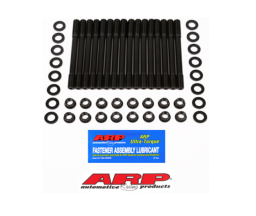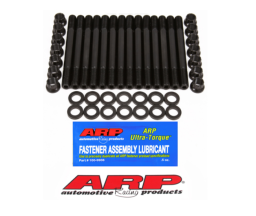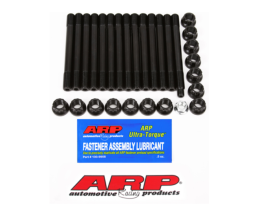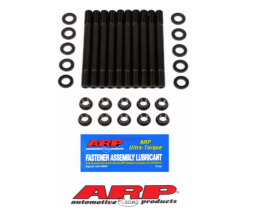
Understanding ARP Bolt Materials: 8740 vs ARP2000 vs L19 vs CA625+
• By Spool Imports
Selecting the correct ARP fastener material for your conrod bolts, head studs and main studs is critical for clamp load, engine reliability and service life. Below we unpack the four common ARP materials—8740, ARP2000, L19 and CA625+—their properties, typical tensile strengths and where each shines.
ARP 8740 Chrome Moly
Material type: Chromium-molybdenum alloy steel (8740 grade)
Typical tensile strength: ~190,000–200,000 psi
Best for: Street and mild performance; NA or mild boost
Trusted entry-level performance fastener with solid fatigue resistance when heat-treated correctly. Common in value-focused head stud kits and some main stud applications where loads remain moderate.
- Pros: Cost-effective, consistent, proven.
- Watch-outs: Needs corrosion protection; not for extreme cylinder pressure.
ARP2000
Material type: Modified 8740 alloy with enhanced alloying/heat treat
Typical tensile strength: ~220,000–230,000 psi
Best for: High-performance street and track; moderate-to-high boost
ARP2000 delivers higher strength and fatigue resistance versus 8740, maintaining clamp load under elevated cylinder pressures. It’s an ideal all-rounder for boosted builds across conrod bolts, head studs and main studs.
ARP L19
Material type: Enhanced alloy/tool-steel family
Typical tensile strength: ~260,000 psi
Best for: Extreme boost/nitrous; drag and endurance where clamp load is critical
L19 significantly improves ultimate strength and stretch resistance for severe duty. Handle and store carefully—L19 is moisture sensitive and should be kept clean and lightly oiled.
ARP CA625+
Material type: Nickel-based superalloy (Inconel-class)
Typical tensile strength: ~260,000+ psi
Best for: Professional motorsport, high heat cycles, marine/endurance
CA625+ combines ultra-high strength with outstanding temperature and corrosion resistance, and is highly resistant to hydrogen embrittlement—ideal where reliability through severe thermal cycling is non-negotiable.
Side-by-Side Comparison
| Material | Tensile Strength (psi) | Corrosion Resistance | Recommended Use | Notes |
|---|---|---|---|---|
| 8740 | 190,000–200,000 | Moderate | Street / Mild performance | Value choice; protect from moisture |
| ARP2000 | 220,000–230,000 | Good | Turbo / High performance street & track | Excellent all-rounder for rods, head studs, mains |
| L19 | ~260,000 | Low | Extreme boost / Drag & endurance | Keep clean & oiled; careful storage/handling |
| CA625+ | ~260,000+ | Excellent | Professional motorsport / Severe thermal cycles | Premium superalloy; ultimate reliability |
Spool Imports Conrods: Standard & Upgrade Bolt Options
- All Spool conrods come standard with ARP2000 bolts.
- L19 bolt upgrade is available for all conrods.
- CA625+ bolts are available for all H-Beam conrods that use 3/8" bolts.
- Drag Pro and X300 conrods use larger 7/16" bolts.
Match bolt material to your target power, RPM, boost and duty cycle. Always install using the correct stretch (preferred for rod bolts) or specified torque + angle procedure.
Head Studs & Main Studs at Spool Imports
We stock head studs and main studs across multiple ARP materials to suit different builds:
- 8740: Selected head stud kits for value-oriented performance where loads are moderate.
- ARP2000: Our most common head stud and main stud kits—excellent for high-performance street and track.
- CA625+ (Selected Models): Premium kits available for platforms such as Ford Barra and Toyota JZ, offering superior heat and corrosion resistance for severe duty and endurance use.
Choosing between 8740, ARP2000 and CA625+ for studs comes down to boost level, combustion pressure and intended usage. For most serious street/track builds, ARP2000 studs are ideal; CA625+ suits extreme heat/pressure or endurance racing.
FAQs: ARP 8740 vs ARP2000 vs L19 vs CA625+
What does a bolt’s tensile strength mean?
Tensile strength is the maximum stress a fastener can withstand before permanent deformation or failure. Higher tensile strength supports higher clamp loads and resists stretch at peak cylinder pressures.
Is L19 stronger than ARP2000?
Yes. L19’s typical tensile strength (~260,000 psi) exceeds ARP2000 (~220,000–230,000 psi), making it suitable for very high boost and nitrous—provided storage/handling prevents corrosion.
Should I use L19 on a street car?
You can, but unless the combo truly demands it, ARP2000 is usually the smarter, lower-maintenance choice for street and mixed-use builds.
When should I step up to CA625+?
Choose CA625+ when the engine sees severe thermal cycling or extreme cylinder pressure (endurance, marine or pro motorsport), or when corrosion resistance is critical.
Which bolts come standard on Spool conrods?
All Spool conrods come standard with ARP2000 bolts. L19 is available for all conrods, and CA625+ is available for H-Beam conrods that use 3/8" bolts. Drag Pro and X300 conrods use larger 7/16" bolts.
What ARP materials are your head studs and main studs?
We offer some head stud kits in 8740, most head and main stud kits in ARP2000, and selected platforms (e.g., Ford Barra and Toyota JZ) in CA625+.