
2618 vs 4032 Forged Pistons Explained | Which Is Best for Performance Engines?
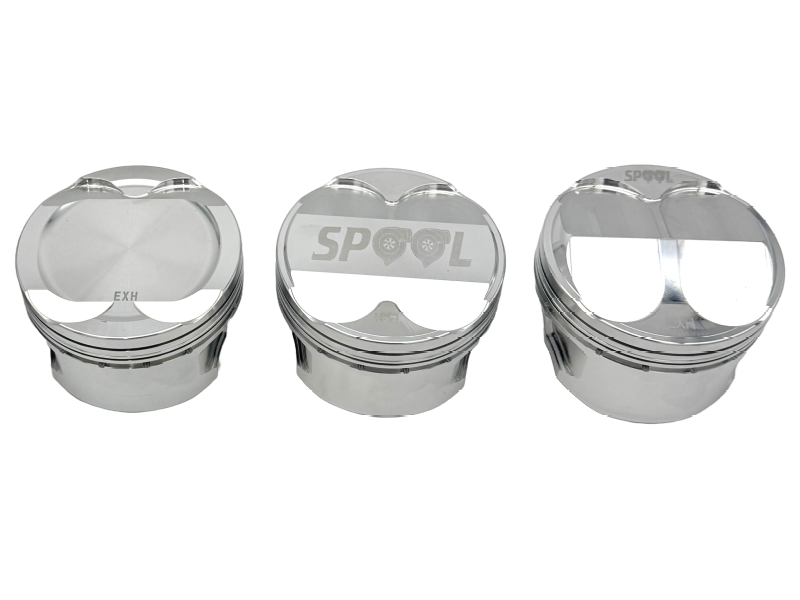
2618 vs 4032 Forged Pistons Explained
When planning a forged engine build, one of the most important decisions is choosing the right piston material. Two of the most common forged piston alloys used in performance engines are 2618 and 4032.
At first glance they can sound similar. Both are forged aluminium piston materials. Both are used in performance engines. Both can survive in serious applications. However, the way they behave under heat, cylinder pressure and load is very different.
The choice between 2618 and 4032 affects:
- piston strength
- boost capability
- thermal expansion
- piston-to-wall clearance
- cold start noise
- engine durability
- detonation tolerance
- long-term reliability in high-performance applications
For a mild naturally aspirated street engine, either material may work. For a serious turbocharged, supercharged or nitrous engine, the choice becomes much more important.
This guide explains the differences between 2618 and 4032 forged pistons, how each material behaves, and why most serious high-performance engine builders continue to prefer 2618 forgings for demanding applications.
What Are 2618 and 4032?
2618 and 4032 are different aluminium alloy compositions used to manufacture forged pistons.
The biggest difference between them is the silica content. Silica improves wear resistance and thermal stability, but it also affects ductility and brittleness.
| Alloy | Silica Content | Main Characteristics |
|---|---|---|
| 2618 | Low silica | Extremely strong, highly ductile, excellent for high cylinder pressure and severe performance use |
| 4032 | High silica | Lower thermal expansion, quieter operation and improved scuff resistance, but less tolerant of extreme cylinder pressure |
Both materials are forged for strength, but they are designed with different priorities in mind.
Why Most Serious Performance Pistons Use 2618
Most high-performance forged pistons from companies such as CP-Carrillo and Ross Racing Pistons are manufactured from 2618 alloy for one simple reason:
2618 is better suited to extreme cylinder pressure and high-load performance applications.
According to CP-Carrillo, 2618-T61 is the material predominantly used in high cylinder pressure applications because it is more ductile and forgiving under load. This is extremely important in modern turbocharged, supercharged and nitrous combinations where cylinder pressure can become enormous.
High boost engines place incredible stress on pistons. Combustion pressure, heat and detonation loads can all spike rapidly. In these conditions, piston material toughness becomes critically important.
2618 alloy is able to absorb these loads more effectively because it is less brittle than 4032.
Why 4032 Pistons Exist
4032 alloy contains a much higher silica content than 2618. The additional silica improves wear resistance and reduces thermal expansion.
This allows:
- tighter piston-to-wall clearances
- reduced cold-start piston noise
- good scuff resistance
- stable operation in lower-stress applications
Because 4032 expands less with heat, the piston can run tighter in the bore without excessive risk of seizure during normal operation.
This makes 4032 attractive for:
- OEM-style performance engines
- mild street applications
- engines prioritising quiet operation
- some naturally aspirated combinations
However, those advantages come with trade-offs.
The Problem With 4032 in High-Boost Engines
The same high silica content that improves wear resistance also makes 4032 more brittle.
As silica content increases, ductility decreases. In other words, the material becomes less forgiving under severe load and shock conditions.
This matters because turbocharged, supercharged and nitrous engines generate extremely high cylinder pressure. Under those conditions, piston material strength alone is not enough. The piston also needs toughness and resistance to cracking under dynamic load.
According to CP-Carrillo:
- 4032 does not lend itself well to high cylinder pressure applications
- high boost diesel applications using 4032 typically require much thicker and heavier pistons to survive
- 2618 remains the preferred material for serious high-performance use
That is a critical distinction.
A thicker, heavier piston can sometimes compensate for weaker material characteristics, but heavier pistons create additional stress elsewhere in the engine. More piston weight increases rod load, crankshaft stress and overall inertia forces at RPM.
Modern high-performance petrol engines generally aim for a piston that is:
- strong
- lightweight
- ductile
- capable of surviving detonation events
- stable under high cylinder pressure
That is why 2618 remains dominant in serious motorsport and high-horsepower turbo applications.
2618 vs 4032: Thermal Expansion
One of the biggest practical differences between these materials is thermal expansion.
2618 expands significantly more with temperature than 4032.
This means a 2618 piston requires more piston-to-wall clearance during engine assembly to allow room for expansion once the engine reaches operating temperature.
| Material | Thermal Expansion | Typical Behaviour |
|---|---|---|
| 2618 | Higher | Requires larger piston-to-wall clearance and may produce more cold-start noise |
| 4032 | Lower | Allows tighter clearances and quieter operation |
Because 2618 pistons run more clearance, they can sometimes produce a characteristic cold-start piston noise commonly called piston slap. This is usually most noticeable before the engine reaches operating temperature.
Some enthusiasts mistakenly assume this means something is wrong with the engine. In reality, mild cold-start noise can be completely normal in a properly built forged engine using 2618 pistons.
Piston-to-Wall Clearance Matters
Piston-to-wall clearance must always suit the piston material, power level, intended use and operating temperature.
Attempting to run a 2618 piston too tight can create serious problems once the piston expands under load.
Potential risks include:
- scuffing
- material transfer
- collapsed skirts
- excessive heat
- piston seizure
On the other hand, running excessive clearance can increase:
- cold-start noise
- oil consumption
- ring instability
- skirt wear
The correct clearance depends on the piston manufacturer’s recommendation, the intended use of the engine, fuel type, boost level and operating environment.
This is one reason serious piston manufacturers such as CP-Carrillo and Ross Racing Pistons provide specific clearance recommendations for their piston designs.
2618 vs 4032 for Turbo Engines
For turbocharged engines, 2618 is generally the preferred choice.
Turbo engines create:
- higher cylinder pressure
- higher combustion temperature
- greater detonation risk
- higher shock loading
- greater thermal cycling
2618’s ductility and toughness make it much better suited to surviving these conditions.
This is particularly important in modern performance platforms such as:
- Ford Barra
- Toyota 1JZ and 2JZ
- Nissan RB25 and RB26
- GM LS turbo builds
- Subaru EJ engines
- Mitsubishi 4G63
- Honda K-series turbo combinations
In these engines, the piston needs to survive not just horsepower, but repeated heat cycles, tuning variations and transient combustion events.
2618 vs 4032 for Naturally Aspirated Engines
In mild naturally aspirated applications, 4032 can sometimes be acceptable where quiet operation and tighter clearances are prioritised.
However, serious naturally aspirated race engines still frequently use 2618 because:
- high RPM creates significant piston loading
- detonation resistance still matters
- lightweight piston design is important
- durability under severe use remains critical
For engines that may eventually see boost, nitrous or aggressive tuning, many experienced builders prefer starting with a 2618 forging from the beginning.
Detonation Resistance
No piston material is truly detonation-proof.
However, 2618 generally survives detonation events better because of its ductility.
When detonation occurs, the piston experiences extremely violent pressure spikes. A brittle material is more likely to crack or fracture under these conditions.
2618’s ability to deform slightly under stress rather than fracture immediately is one reason it remains so popular in high-performance engines.
This does not mean tuning can be ignored. Poor tuning can destroy any piston. However, in real-world performance use, 2618 provides more safety margin when conditions become severe.
Weight and Piston Design
One important point often overlooked is that piston material affects piston design.
Because 2618 is stronger and more ductile, piston designers can often achieve the required strength with a lighter piston structure.
That matters because lighter pistons reduce:
- connecting rod load
- crankshaft stress
- inertia forces at RPM
- bearing load
- overall rotating assembly stress
In high-RPM or high-boost applications, reducing reciprocating weight becomes very important for reliability.
2618 vs 4032: Machining and Manufacturing
According to CP-Carrillo, 4032 is more difficult to machine because the higher silica content wears tooling more quickly.
2618 is generally easier to machine into complex lightweight piston designs used in serious motorsport and performance applications.
This is one reason many premium motorsport piston manufacturers continue to focus heavily on 2618 forgings.
OEM Pistons vs Aftermarket Forged Pistons
Some OEM performance engines use piston materials similar to 4032 because they prioritise:
- quiet operation
- cold-start refinement
- emissions
- long service intervals
- mass production consistency
That does not automatically mean the material is ideal for high-horsepower aftermarket use.
Once boost pressure, RPM and cylinder pressure increase significantly beyond factory levels, the piston requirements change dramatically.
Common Myths About 2618 Pistons
“2618 pistons are noisy, so they must be bad.”
Not true. Some cold-start noise is simply a result of larger piston-to-wall clearance. Once warm, many properly built 2618 engines operate perfectly normally.
“4032 is stronger because it wears less.”
Wear resistance and ultimate performance durability are not the same thing. 4032 has good scuff resistance, but 2618 is generally superior for severe cylinder pressure and shock loading.
“You only need 2618 for race cars.”
Many modern street cars produce enormous power levels. A 1000 horsepower street Barra or JZ places huge demands on pistons even if the car is driven on the road.
“Tighter clearance always means a better engine.”
The clearance must suit the material and application. Running a 2618 piston too tight can destroy the piston once temperature rises.
2618 vs 4032 Quick Comparison
| Feature | 2618 | 4032 |
|---|---|---|
| Strength under high cylinder pressure | Excellent | More limited |
| Ductility | Very high | Lower |
| Detonation tolerance | Better | Less forgiving |
| Thermal expansion | Higher | Lower |
| Piston-to-wall clearance | Larger | Tighter |
| Cold-start noise | More common | Less common |
| Turbo suitability | Excellent | Less ideal for serious boost |
| Nitrous suitability | Excellent | Less ideal |
| High-RPM suitability | Excellent | Application dependent |
| Preferred for serious performance builds | Yes | Usually no |
Where CP-Carrillo and Ross Racing Pistons Fit In
At Spool Imports, the majority of the forged piston combinations supplied from CP-Carrillo and Ross Racing Pistons are based around 2618 forgings because they are better suited to serious performance use.
Whether the goal is a forged Barra, JZ, RB, LS, Subaru, Mitsubishi or Honda build, the priority is usually:
- strength under boost
- detonation resistance
- high cylinder pressure capability
- long-term durability
- reliability in demanding use
That aligns directly with the strengths of 2618 piston material.
For customers building high-horsepower turbo combinations, 2618 remains the proven and trusted choice across the performance industry.
Frequently Asked Questions
Which is stronger, 2618 or 4032?
For high cylinder pressure performance applications, 2618 is generally considered the superior material because it is more ductile and more resistant to cracking under severe load.
Why are 2618 pistons noisier?
2618 expands more with heat, so it requires larger piston-to-wall clearance. This can create mild cold-start piston noise before the engine reaches operating temperature.
Are 4032 pistons bad?
No. 4032 can work well in some lower-stress applications where tighter clearances and quieter operation are priorities. However, for serious turbocharged or high-cylinder-pressure applications, 2618 is generally preferred.
Can 4032 pistons handle boost?
Some low-boost applications use 4032 successfully, but high boost levels place much greater demands on the piston material. Most serious high-performance turbo engines use 2618 forgings.
Do 2618 pistons wear out faster?
Not necessarily. Correct piston-to-wall clearance, machining quality, tuning and oil control are all critical. A properly built 2618 engine can have excellent durability.
Which piston material is best for turbo Barra, JZ or RB engines?
For serious turbocharged performance applications, 2618 forged pistons are generally the preferred choice because of their ductility, strength and ability to survive high cylinder pressure.
Final Thoughts
Choosing between 2618 and 4032 forged pistons is ultimately about understanding the intended use of the engine.
4032 offers tighter clearances, quiet operation and good wear resistance, but those advantages come with reduced ductility and less suitability for extreme cylinder pressure.
2618, on the other hand, remains the benchmark for serious high-performance engines because it is tougher, more forgiving and far better suited to turbocharged, supercharged and nitrous applications.
That is why the majority of serious performance piston manufacturers continue to rely heavily on 2618 forgings for demanding motorsport and high-horsepower street applications.
If you are planning a forged engine build for a Barra, JZ, RB, LS, Subaru, Mitsubishi, Honda or other high-performance platform, Spool Imports can help with the right CP-Carrillo or Ross Racing Pistons package for your power goals and application.

