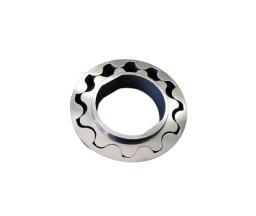
Nissan RB Oil Pump Guide – RB20, RB25, NEO, RB26 & RB30
The Nissan RB engine family has earned a reputation for handling serious power, but its oil pump system has also become one of the areas experienced engine builders pay particular attention to during a performance build.
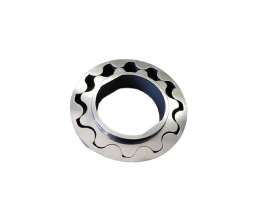
RB20, RB25DET, RB25DET NEO, RB26DETT and RB30 engines all use a crank-driven gerotor-style oil pump mounted at the front of the engine. At first glance the pumps look very similar, and pumps from later RB engines are commonly fitted to earlier engines. Unfortunately, that interchangeability has also created plenty of confusion.
After 25 to 35 years of engine rebuilds, crankshaft changes and oil pump upgrades, you should never assume that the pump fitted to an RB engine today is the pump Nissan originally installed.
If you are ordering billet oil pump gears or other pump-specific components, identify the pump by measuring the gears. Do not rely solely on the engine model.
Why the RB Oil Pump Matters in a Performance Engine
An oil pump has a fairly simple job, but failure has serious consequences. The pump must maintain adequate oil supply through the engine across changing RPM, oil temperature and engine load.
In a modified RB, several things make the pump's job harder. Higher engine speeds increase pump speed, bearing loads increase with cylinder pressure, oil temperature can increase, and sustained high-RPM operation can expose weaknesses that were never particularly important in a standard road engine.
There are three areas we concentrate on when building a reliable RB oil pump system:
- The oil pump gears – particularly replacing the factory sintered gears in a performance application.
- The crankshaft-to-pump drive – ensuring the inner gear has a strong, positive and adequately engaged drive.
- The pump housing and backing plate – controlling clearances and reducing the potential for movement or flex at high RPM.
For more serious builds there is a fourth option: replacing the modified OEM-style pump altogether with a purpose-built billet oil pump.
RB Oil Pumps Are Not All the Same
Nissan used several variations of the RB oil pump over the life of the engine family. The most important distinction when buying replacement gears is the physical size of the gear set.
| Engine / Pump | Common Pump Arrangement | Performance Build Approach |
|---|---|---|
| RB20 | Early RB-style pump | Billet gears and attention to crank drive engagement are strongly recommended for performance use. |
| RB25DET | Typically earlier 81 mm-style gear pump | Billet gears; crank collar or spline drive should be considered during a serious rebuild. |
| RB25DET NEO | Typically later/N1-style 77 mm gear arrangement | Billet gears matched to the measured pump; spline drive is an option where required. |
| RB26DETT | Standard and N1 pump variations exist | Measure the pump before ordering gears. Early crank drive design also needs particular attention. |
| RB30 | Original RB30 pump and short/narrow crank drive | For performance builds the original RB30 pump is commonly replaced with a later RB25-style pump, requiring the appropriate crank collar arrangement. |
Important: the table describes the pump arrangements commonly encountered. It is not a substitute for physically checking the pump. These engines are now old enough that many have been rebuilt, converted or had pumps swapped more than once.
What Is an RB26 N1 Oil Pump?
The Nissan N1 oil pump is associated with the competition-oriented N1 specification RB26 and carries Nissan part number 15010-24U01. The N1 pump uses a different gear arrangement from the standard 81 mm RB26 pump, with the commonly supplied N1 gear set using an approximately 77 mm outside diameter gear.
The N1 pump became a popular upgrade for other RB engines and can be found on engines that never left Nissan with one fitted. The later RB25DET NEO also commonly uses the smaller-diameter pump gear arrangement.
This is where relying on an engine code can get you into trouble.
An RB25 may have an original pump, an N1 pump, a later replacement pump or an aftermarket pump. An RB26 may have a standard pump, N1 pump or something fitted during a previous rebuild.
The only reliable way to determine which replacement billet gears you require is to open the pump and measure the existing gear set.
81 mm Versus 77 mm RB Oil Pump Gears
Two of the most common gear sizes encountered in RB25/RB26 applications are approximately:
- 81 mm outside diameter – commonly associated with the standard OEM-style RB25/RB26 pump.
- 77 mm outside diameter – commonly associated with the Nissan N1 and later NEO-style arrangement.
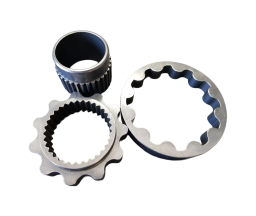
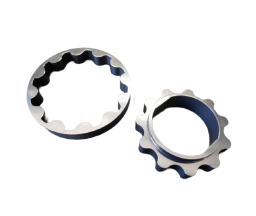
Spool stocks billet gear sets for both configurations, including 81 mm OEM-style RB billet oil pump gears and billet gears for the N1 pump.
Measure before ordering. It is much easier than discovering during engine assembly that the gear set doesn't fit the pump sitting on the bench.
What About the RB30 Oil Pump?
The RB30 deserves separate attention because its original oil pump arrangement is generally not the preferred starting point for a serious performance RB30 build.
For a standard engine the original system did its job, but performance RB30 and RB25/30 builds commonly move away from the original RB30 pump and use a later RB25-style oil pump.
There is an important catch.
The RB30 crankshaft uses the earlier narrow oil-pump drive arrangement. When converting to the later pump, the crank needs an appropriate extended oil pump drive collar. This gives the inner oil pump gear a much greater engagement area than the original narrow crank drive.
The crankshaft must be removed and machined correctly to install the collar. This is an engine-building operation, not an in-car bolt-on modification.
The Early RB Crank Drive Problem
One of the weaknesses of the early RB oiling system isn't actually the pump itself. It is the way the crankshaft drives it.
Early RB crankshafts use relatively short flats on the crank nose to engage the flats inside the oil pump's inner gear. The engagement area is small, concentrating load into a relatively narrow section of the gear.
This arrangement is found on applications including RB20, RB25, RB30 and early RB26 engines.
Nissan subsequently changed the RB26 crank design to provide substantially greater engagement between the crankshaft and pump gear.
If an early crank is being used in a performance engine, particularly one that is already apart for machining, correcting the oil pump drive should be considered part of the build rather than something to think about after the engine is assembled.
Flat Drive Crank Collar or Spline Drive?
There are two main ways of addressing the crank drive when retaining an internal RB oil pump.
Extended OEM-Style Flat Drive Collar
A flat-drive collar retains the basic Nissan drive concept but extends the engagement surface so that considerably more of the inner oil pump gear is driven by the crankshaft.
For many RB builds this is a proven and effective solution.
The crank nose must be accurately machined to accept the collar. Once installed, the longer drive surfaces engage much more of the pump gear than the original short-drive crank.
Spool Spline Drive Collar and Billet Gears
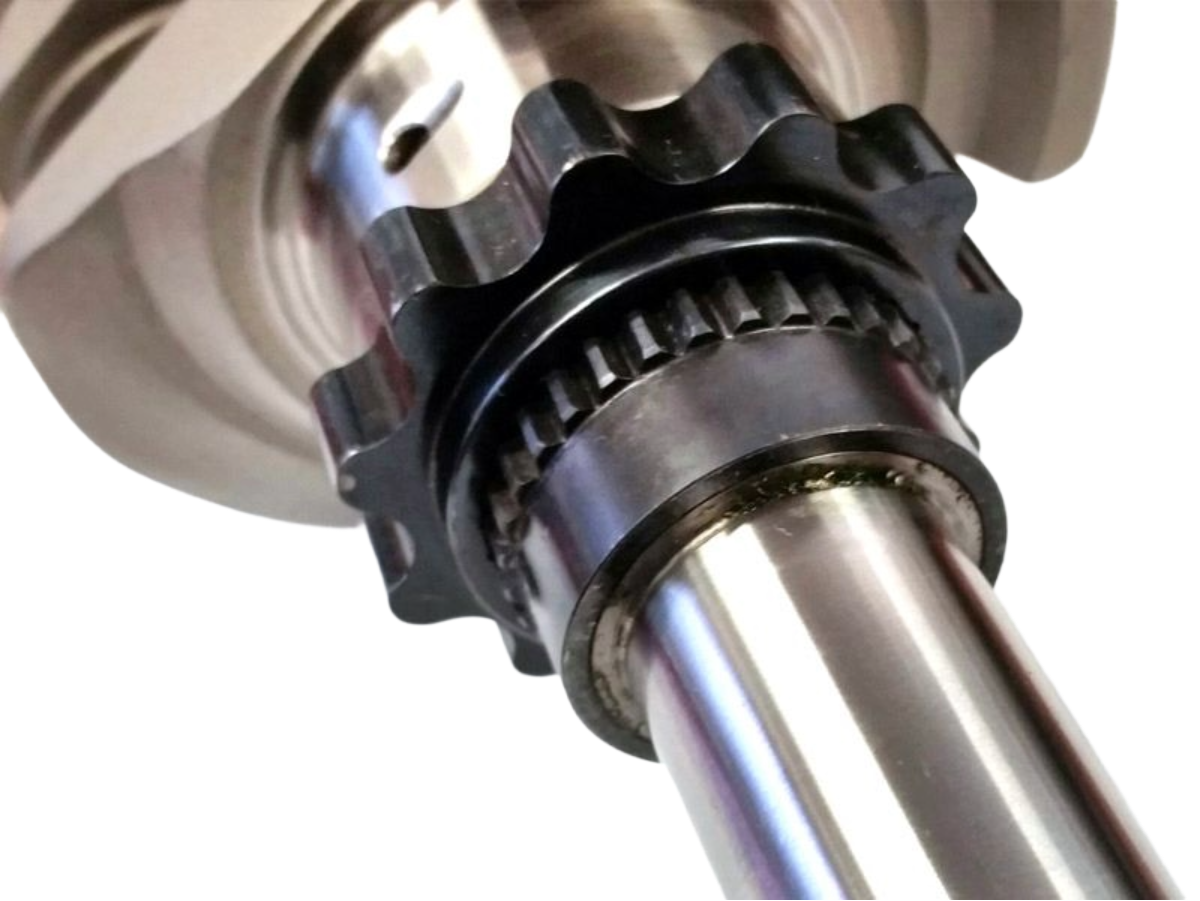
The alternative is to replace the two-flat Nissan drive arrangement with a spline drive.
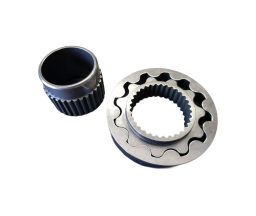
Spool offers spline-drive billet oil pump gear sets incorporating a matching spline collar. The spline arrangement provides multiple positive drive surfaces around the crank rather than transmitting the pump load through the two original flats.
The spline-drive option is particularly attractive when:
- the engine is being built for sustained high RPM or serious performance use;
- the crankshaft is already being machined as part of a complete engine build;
- an RB30 or early RB crank needs a collar anyway; or
- the original RB25 crank oil-pump drive surfaces are worn or damaged.
That last point is important. A spline-drive conversion isn't only an RB30 or early RB26 modification. If an RB25 crank has wear on the factory oil-pump drive, machining it for a spline collar can provide a better solution than asking a new billet gear to run on damaged drive surfaces.
As with a conventional extended collar, fitting the spline collar requires the crankshaft to be removed and professionally machined.
Why Billet RB Oil Pump Gears Are So Important
If there is one oil pump modification we regard as essential in a serious performance RB build, it is replacing the factory sintered oil pump gears with quality billet gears.
The factory gears are manufactured using a powder metallurgy process. Metal powder is compacted under high pressure into the required shape and then sintered at high temperature to bond the particles together.
This is an efficient manufacturing method for producing accurate components in large quantities, and the factory gears can survive for decades in their intended application.
But a highly modified RB is no longer operating in the environment Nissan originally designed those components around.
Sintered gears can be susceptible to cracking and fracture when exposed to the shock loads, harmonics and high pump speeds encountered in performance engines. The transition around the factory drive flats is also an area where stress can become concentrated.
A cracked oil pump gear can turn into a complete loss of oil pressure very quickly. Considering the value of a properly built RB engine, retaining a known weak component inside the oil pump makes little sense.
Australian-Made EN26 Billet Oil Pump Gears
The billet RB oil pump gears supplied by Spool are manufactured in Australia from EN26 high-strength alloy steel.
Rather than being formed from powdered metal, the gears are precision manufactured from billet material. The gear profiles are precision wire cut, allowing the geometry and clearances to be tightly controlled.
Spool offers gear sets to suit different RB oil pump configurations, which is another reason we strongly recommend measuring your existing gears before ordering.
Available configurations include:
- OEM-style flat-drive billet gears;
- N1-specification billet gears;
- spline-drive billet gears with matching crank collar; and
- gear sets for various OEM and aftermarket RB pump housings.
For a performance engine, we consider billet gears a fundamental reliability upgrade rather than an optional extra.
Do You Need a Billet Oil Pump Backing Plate?
Once the gears are addressed, the next part to consider is the oil pump backing plate.
The backing plate controls the rear of the gear cavity. Under demanding high-RPM operation, movement or flex in the standard arrangement can affect the internal clearances of the pump and allow oil to bypass where it shouldn't.
A stronger billet backing plate provides a more rigid surface and can improve consistency in a high-performance application.
Spool offers billet backing plates for N1-style RB oil pumps, with versions also available for other RB pump configurations.
We view the backing plate differently from the gears.
For a serious performance RB, billet oil pump gears are a must. A billet backing plate is a worthwhile additional reliability upgrade, but it isn't compulsory for every build.
As with the gears, make sure the backing plate matches the pump you actually have rather than selecting it purely from the engine model.
Complete Billet RB25/RB26 Oil Pumps
For customers wanting to go beyond modifying a factory housing, complete billet RB oil pumps are also available.
Spool's Australian-made RB25/RB26 billet flat-drive oil pump and RB25/RB26 billet spline-drive oil pump use a purpose-built billet aluminium housing rather than a modified factory casting.
They incorporate high-strength gears and a steel rear backing plate and have been bench tested across a broad RPM range. The pumps have been designed to provide approximately 15% more oil flow than the OEM pump.
The spline-drive version combines the billet pump with the more positive spline crank drive arrangement, making it particularly suitable for serious RB builds where the crankshaft is already being machined.
More Oil Flow Is Not Always the Whole Answer
It is worth remembering that an RB oiling system is more than its oil pump.
Simply fitting a higher-capacity pump does not correct every oil-control issue. Bearing clearances, oil viscosity, sump design, oil level, crankcase pressure, oil drain-back, cylinder-head oil control, restrictors and the way the car is used all affect the overall system.
In particular, a high-RPM RB needs to keep enough oil in the sump for the pump pickup to remain supplied. Moving more oil into the engine is not useful if the sump and drain-back system cannot return and control it effectively.
The correct solution therefore depends on whether the engine is a street car, drag engine, circuit car or a combination of uses.
What Oil Pump Setup Should I Use?
There is no single specification for every RB build, but a sensible approach is:
Standard or Mild Street RB
A good-condition OEM-style pump may be adequate, but given the age of these engines the pump should be inspected carefully during a rebuild. If the engine is being built for increased RPM or power, billet gears are inexpensive insurance compared with the cost of an engine failure.
Performance RB20 or RB25
Use the appropriate pump with billet gears. Inspect the crank drive carefully. If the factory drive is worn, a spline-drive collar is a strong option rather than retaining a compromised flat drive.
RB25 NEO
Do not simply order gears because the engine is a NEO. Measure the existing gear diameter first, then order the matching billet gear set. A billet backing plate can also be added for further pump rigidity.
Performance RB26
First establish whether the engine has a standard or N1-style pump and whether the crank has the early or later oil-pump drive. Billet gears should be considered a core part of a serious performance build. Early crankshafts should have the drive issue addressed while the engine is apart.
Performance RB30 or RB25/30
We generally recommend moving away from the original RB30 oil pump arrangement and using a later RB25-style pump configuration. Because of the RB30 crank drive, this conversion requires the crank to be machined for an appropriate drive collar. If the crank is being machined anyway, a spline-drive arrangement is well worth considering.
Serious High-RPM or Competition RB
A complete billet internal pump or an external wet-sump/dry-sump arrangement may be appropriate depending on the engine and vehicle. At this level the entire lubrication system should be designed as a system rather than treating the oil pump as an isolated component.
Measure Before You Order
This is probably the most important practical point in this article.
Do not identify an RB oil pump solely from the badge on the boot, the engine code stamped on the block or what somebody believes was installed during the last rebuild.
Remove the pump cover and measure the gears.
An RB engine may have had several owners and multiple rebuilds. Pumps and crankshafts are interchangeable enough that what is fitted today may have very little relationship to what Nissan installed when the engine was manufactured.
If you're unsure which billet gear set, backing plate, collar or complete pump is appropriate, measure the existing components before ordering.
Frequently Asked Questions
What oil pump is fitted to an RB25DET?
Most earlier RB25DET engines use the larger OEM-style pump gear arrangement, commonly around 81 mm outside diameter, while later NEO engines commonly use the smaller N1-style arrangement. However, pumps are frequently changed during engine rebuilds, so the gears should always be measured before ordering replacements.
What size gears are in a Nissan N1 oil pump?
The commonly used Nissan RB26 N1 oil pump uses an outer gear approximately 77 mm in diameter and 11 mm thick. Always physically measure an existing pump before ordering billet gears because pumps are regularly swapped between RB engines.
Can I put an RB25 oil pump on an RB30?
Yes, and using a later RB25-style pump is common on performance RB30 builds. The RB30 crank uses the early narrow oil-pump drive, so the crankshaft needs to be correctly machined for an appropriate extended flat-drive or spline-drive collar when converting the pump arrangement.
Do I need a crank collar on an RB30?
A crank collar should be incorporated when converting a performance RB30 to the later RB25-style oil pump arrangement. The original RB30 crank has a short/narrow oil-pump drive that does not provide the engagement of the later design.
Does an RB25 need a spline-drive oil pump?
Not necessarily. A good flat-drive arrangement with adequate engagement and quality billet gears can work very well, but spline drive is a useful upgrade for serious builds and is particularly attractive when the original crank drive surfaces are worn or damaged.
Does the crankshaft need machining for an RB spline-drive collar?
Yes. The crankshaft must be removed from the engine and accurately machined to accept the spline-drive collar. This should be carried out by an experienced engine machine shop.
Why do factory RB oil pump gears break?
The factory RB gears are manufactured from sintered powdered metal. This manufacturing method works for the original application, but the gears can crack or fracture when subjected to the increased RPM, harmonics and shock loads found in highly modified performance engines.
Are billet oil pump gears necessary in a performance RB?
Spool considers quality billet oil pump gears a fundamental reliability upgrade for a serious performance RB engine. The cost of replacing the factory sintered gears is small relative to the potential engine damage caused by a failed oil pump gear.
Do I need a billet oil pump backing plate?
A billet backing plate is not compulsory in the same way we consider billet gears to be for a serious performance build, but it is a worthwhile additional upgrade. The more rigid backing plate helps control pump clearances and reduces flex under demanding high-RPM operation.
Is an N1 oil pump automatically better for every RB?
No. Pump selection should be based on the complete engine and oiling system rather than simply fitting an N1 pump because it is considered an upgrade. Regardless of pump choice, gear strength, crank engagement, pump condition, clearances and overall oil control remain important.
How do I know which RB billet oil pump gears to order?
Measure the outside diameter and thickness of the gears in the oil pump you are actually using. Do not order solely from the engine model because many RB engines have had different pumps installed during previous rebuilds.