Haltech Nexus R3 Barra ECU Setup: Complete Guide
Building a Complete Haltech Nexus R3 Engine Management System for a Ford Barra
The Ford Barra has reached the point where four-figure horsepower builds are relatively common, but the engine management system controlling them is often still treated as little more than an ECU and wiring harness.
For a serious Barra build, we think there is a better way to approach it.
Rather than starting with an ECU and progressively adding parts as they become necessary, the engine management system can be designed as a complete package from the outset. That means considering the ECU, wiring, ignition, injector connections, lambda control, fuel and oil pressure monitoring, driver display and the additional sensors that can actually protect the engine if something goes wrong.
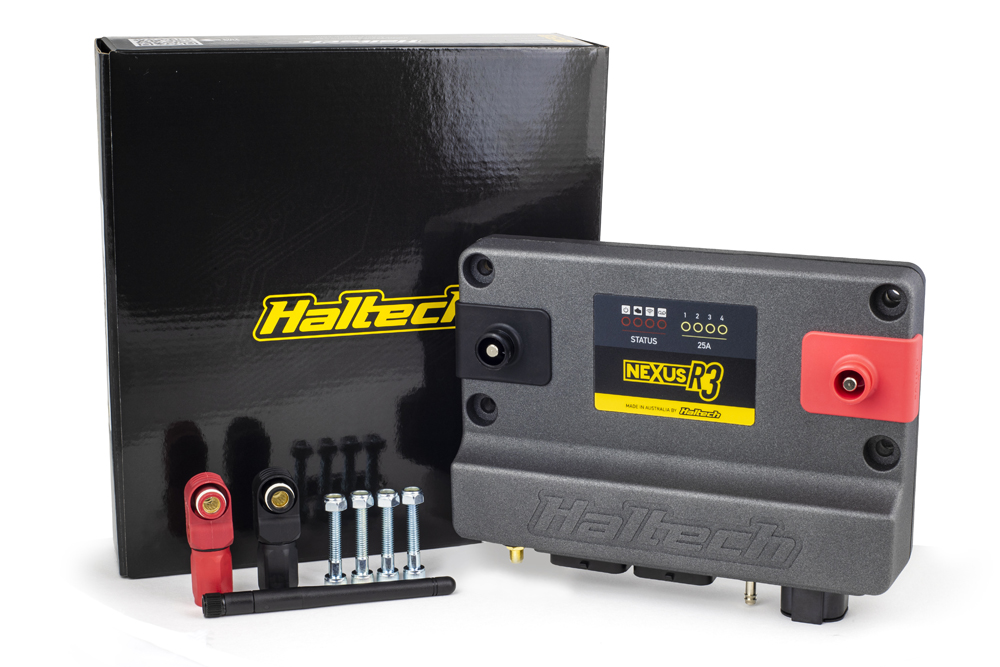
The Haltech Nexus R3 is particularly well suited to this approach. Combined with Haltech's dedicated Barra terminated harness and a uC-10 digital dash, it provides the basis for a very comprehensive Barra control and monitoring system.
Why the Nexus R3 Makes Sense for a Serious Barra
The Nexus R3 isn't simply a conventional standalone ECU. It combines engine management with an onboard PDM, data logging, wideband control and advanced vehicle-control functions in a single VCU.
For a Barra installation, the real advantage is how much of the engine and vehicle can be brought together into one system.
With the dedicated HT-186405 Nexus R3 Ford Barra terminated harness, the R3 can support key factory and aftermarket functions including:
- BA, BF and FG electronic throttle and accelerator pedal
- Intake and exhaust variable cam timing
- Factory crank and cam sensors
- Factory knock sensors
- Alternator control
- Air-conditioning clutch and pressure switch
- Dual intake runner control where applicable
- Fuel pump control
- Thermofan control
- Boost control
- Wideband lambda
- CAN devices including displays and keypads
- Additional analogue and digital inputs and outputs
The terminated harness also includes adaptors for common BA/BF and FG electronic throttle, accelerator pedal and alternator configurations.
This makes the R3 particularly attractive for a Barra conversion or a heavily modified Falcon where the objective is to replace the factory management system with something capable of controlling considerably more than simply fuel and ignition.
Start with the Core Package
For a premium Barra installation, we would start with three major components:
- Haltech Nexus R3 VCU – HT-193000
- Haltech Nexus R3 Ford Barra Terminated Harness – HT-186405
- Haltech uC-10 Digital Dash – HT-068000
The R3 and Barra harness provide the engine-management foundation, while the uC-10 becomes the driver's interface with the system.
Connecting the dash through Haltech CAN means the uC-10 can display information already available to the R3 without installing separate gauges and duplicate sensors throughout the vehicle.
RPM, boost, lambda, fuel pressure, oil pressure, temperatures, ethanol content and many other channels can potentially be displayed, logged or used for warnings depending on how the vehicle is configured.
A Wideband Lambda Sensor Should Be Part of the System
The Nexus R3 incorporates a wideband controller and supports Bosch LSU 4.9 wideband hardware.
Wideband lambda isn't just useful for tuning.
Once lambda information is available to the ECU, it can be incorporated into closed-loop fuel control and engine-protection strategies if the measured mixture moves outside the limits configured by the tuner.
On a high-output Barra, that distinction is important. Sensors should not simply provide information for a dashboard – wherever practical, the ECU should be able to respond to that information.
Fuel Pressure Monitoring – More Than Another Gauge
Fuel pressure is one of the measurements we consider particularly important on a high-performance Barra.
A fuel system can have a problem while the engine is still running normally enough that the driver may not immediately recognise it. A failing pump, electrical supply issue, blocked filter, pressure regulator problem or fuel supply limitation can potentially result in inadequate fuel delivery under load.
By connecting a fuel pressure sensor directly to the R3, fuel pressure becomes part of the engine-management strategy rather than simply another number on a gauge.
The ECU can compare fuel pressure against manifold pressure and use the resulting information for monitoring, diagnostics and appropriately configured engine protection.
Spool carries a range of Haltech pressure sensors, including 150 psi TI fuel/oil/wastegate pressure sensors suitable for this type of application.
Oil Pressure Monitoring
Oil pressure deserves the same treatment.
A conventional oil pressure warning light is a very crude form of protection for an expensive performance engine.
Connecting an oil pressure sensor to the R3 allows oil pressure to be evaluated against engine operating conditions. What constitutes acceptable pressure at hot idle is very different from what should be expected at high engine speed and load.
That gives the tuner considerably more flexibility when configuring warnings and engine-protection strategies.
For a properly specified high-end Barra package, we would include both fuel and oil pressure sensing.
Choosing the Correct Injector Harness
One component that cannot simply be selected universally is the injector sub-harness.
The Nexus Barra harness has an injector breakout connection, with different sub-harnesses available depending on the injector connector being used.
Haltech provides options for common:
- Timer / EV1 injectors
- GT150 / USCAR EV6 injectors
- Sumitomo / Denso injectors – HT-186010
The correct version therefore needs to be selected to suit the injectors fitted to the engine.
Ignition – Factory Coils or R35 Conversion?
Ignition is another area where the package needs to be configured for the particular Barra.
The original two-pin Barra ignition coils are non-ignited coils. They cannot simply be connected directly to ECU ignition outputs and require the appropriate ignition hardware.
The R3 Barra harness supports the factory arrangement with the appropriate BA/BF or FG ignition sub-harness and igniter components.
For a premium build, however, another option is the Haltech HT-120205 R35 coil conversion package.
This provides a complete alternative to retaining the original Barra ignition arrangement and is directly supported by the R3 Barra harness.
Rather than declaring one ignition configuration correct for every engine, we would make ignition a required choice when configuring the system.
Factory BA/BF Coils
Suitable for an installation retaining the original BA/BF coil arrangement, using the appropriate Haltech ignition harness and external igniter components.
Factory FG Coils
Again uses the appropriate Haltech FG ignition sub-harness and igniter arrangement.
R35 Coil Conversion
For a new high-end build, this is the configuration we expect many customers will choose. It provides a smart-coil solution and removes the need to retain the factory-style external igniter arrangement.
Boost Control – Choose It for the Application
The Barra harness includes a dedicated boost-control connection, but the correct boost-control system depends heavily on the vehicle.
A conventional turbocharged street Barra may only require a three-port boost-control solenoid. More serious drag applications may use four-port control, wastegate pressure control or a CO₂-based system.
Spool also stocks Haltech's CO₂ boost-control dual-solenoid and pressure-sensor kit as part of the Haltech pressure and boost-control range.
For that reason, boost control makes more sense as a configurable option rather than something every R3 Barra package should automatically include.
Flex Fuel
For a Barra that regularly switches between pump petrol and ethanol blends, a Haltech flex-fuel composition sensor can add significant functionality.
The Barra terminated harness includes provision for flex-fuel sensing, allowing the R3 to measure ethanol content and use that information within the calibration.
Depending on how the tune is configured, ethanol content can influence fuelling, ignition, boost and other strategies.
For a dedicated E85 race vehicle it may be unnecessary. For a street car that needs to operate on varying fuel blends, it can be a very useful addition.
Adding a CAN Keypad
A Haltech CAN keypad is not required to run the engine, but it can significantly improve how the driver interacts with a sophisticated R3 installation.
Instead of installing individual switches throughout the cabin, configurable keypad buttons can potentially be assigned to functions such as boost modes, launch control, rolling launch, traction strategies, burnout mode, anti-lag, thermofan override and other tuner-configured functions.
Spool stocks both the Haltech 8-button CAN keypad – HT-011501 and the 15-button CAN keypad – HT-011502.
For a competition vehicle in particular, combining an R3, uC-10 and CAN keypad can produce a very clean driver interface.
Going Further with Engine Protection
This is where a Nexus installation can become considerably more sophisticated.
Once fuel pressure, oil pressure and lambda are covered, additional sensors can be added according to the engine and its intended use.
Coolant Pressure
Coolant pressure monitoring can provide additional information about what is happening inside the cooling system. On highly stressed engines, abnormal cooling-system pressure can be useful diagnostic information and may provide an earlier indication of a developing problem.
Crankcase Pressure
Crankcase pressure is another useful measurement on serious race engines. Changes in crankcase pressure can help identify issues with the breather system and may also provide useful information when diagnosing engine condition.
Wastegate or CO₂ Pressure
Cars using more sophisticated pneumatic boost-control systems can monitor the pressure being applied to the wastegate and incorporate that information into the overall control strategy.
Transmission Pressure and Temperature
On high-powered automatic Barra combinations, monitoring the transmission can be just as important as monitoring the engine. The Barra harness provides a transmission breakout that can be used for additional transmission sensors or integration with compatible control systems.
What About EGT?
Exhaust gas temperature monitoring can be taken a step further with individual-cylinder EGT measurement.
This is unlikely to be necessary for the majority of street Barra builds, but it becomes considerably more interesting on very high-output competition engines where cylinder-to-cylinder information can assist with tuning and diagnostics.
Rather than making EGT part of every package, we would regard it as an advanced motorsport option.
What We Would Put in a Complete R3 Barra Package
If we were specifying a high-end Barra engine management package from scratch, our starting point would be:
- Haltech Nexus R3 VCU
- Nexus R3 Ford Barra terminated harness
- Haltech uC-10 digital dash
- Wideband lambda sensor and hardware
- Fuel pressure sensor
- Oil pressure sensor
- Injector harness selected to suit the injectors
- Ignition configuration selected to suit the engine
From there, the package can be expanded with:
- R35 ignition coil conversion
- Three-port, four-port or CO₂ boost control
- Flex-fuel sensor
- CAN keypad
- Coolant pressure sensor
- Crankcase pressure sensor
- Additional MAP or pressure sensors
- Transmission monitoring or control
- Individual-cylinder EGT monitoring
The Important Part Is the Strategy
There is little point fitting ten sensors to an engine if they simply put ten more numbers on a dashboard.
The real benefit of a system such as the Nexus R3 is the ability to use appropriate sensor data within the ECU strategy.
That might mean displaying a warning on the uC-10, limiting boost, introducing an RPM limit or taking another action configured by the tuner when an operating parameter moves outside an acceptable range.
The exact protection strategy needs to be developed by the tuner for the individual engine. Oil pressure limits, fuel pressure differential, lambda limits and other thresholds should not simply be copied from another vehicle.
A 700 hp street Barra and a 2,000 hp drag engine may use the same R3, but they are not the same application.
Building the System Around the Engine
That is ultimately how we think a high-end Barra management system should be specified.
Start with the R3, Barra terminated harness and uC-10 as the platform. Add the correct injector and ignition hardware for the engine. Then choose the sensors, boost-control hardware and CAN accessories that are actually appropriate for the vehicle.
The result is not simply an ECU installation. It is a complete engine control, monitoring and protection system that can grow with the Barra as the combination develops.
For more information on the available ECU, dash, sensor and wiring options, see the Haltech range at Spool Imports.
Frequently Asked Questions
Does the Haltech Nexus R3 work with BA, BF and FG Barra engines?
Yes, for supported applications. Haltech's R3 Barra terminated harness supports selected BA, BF and FG Barra engines and includes adaptors for the relevant electronic throttle, accelerator pedal and alternator arrangements. Exact engine and vehicle compatibility should be confirmed before ordering.
Do I need an external wideband controller with a Nexus R3?
No separate conventional wideband controller is required when using supported wideband hardware because the Nexus R3 incorporates an onboard wideband controller.
Are oil and fuel pressure sensors required for the Nexus R3 to run a Barra?
No. They aren't required simply to operate the engine, but we consider both worthwhile additions to a high-performance Barra because the information can be incorporated into monitoring and engine-protection strategies.
Can the Nexus R3 run the factory Barra ignition coils?
Yes, with the correct ignition sub-harness and igniter hardware. The factory two-pin Barra coils are non-ignited coils and should not be connected directly to ECU ignition outputs.
Can I use R35 coils on a Barra with the Nexus R3?
Yes. The R3 Barra terminated harness supports the Haltech HT-120205 R35 coil conversion kit.
Which injector harness do I need?
That depends on the injector connector. Haltech offers six-cylinder injector sub-harnesses for common EV1, USCAR/EV6 and Sumitomo/Denso injector connections.
Do I need a Haltech CAN keypad?
No. A CAN keypad is optional, but it provides a clean way to give the driver access to tuner-configured functions such as boost modes, launch functions and other vehicle controls.
Can the R3 control boost on a Barra?
Yes. The Barra terminated harness provides a dedicated connection for boost-control hardware. The appropriate solenoid and control arrangement depends on the turbocharger, wastegate system and intended use of the vehicle.
Can I add more sensors later?
Yes. The Nexus R3 provides additional inputs, outputs and CAN connectivity, allowing the engine management system to be expanded as the engine and vehicle combination develops.


-
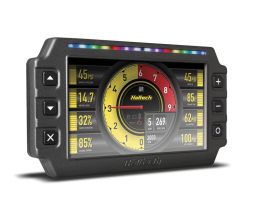 Haltech iC-7 Colour Display Dash Size: 7in (HT-067010)Special Price AUD$1,486.36 Regular Price AUD$1,631.82
 -
-
 Haltech uC-10 Digital Dash, Size: 10in (HT-068000)Special Price AUD$2,659.09 Regular Price AUD$2,908.18