How to File Fit Piston Rings Properly
How to File Fit Piston Rings Properly (And Why It Matters)
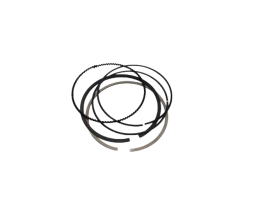
If you're building an engine with forged pistons, you're almost certainly working with file fit piston rings.
Unlike standard drop-in rings, file fit rings are intentionally supplied with a tight end gap and must be precisely set to suit your bore size and horsepower target.
This is one of the most critical steps in any performance engine build. Get it right and you achieve proper ring seal, stable cylinder pressure and long-term reliability. Get it wrong — especially on the top ring — and you can destroy a piston very quickly.
What Are File Fit Piston Rings?
File fit rings are piston rings manufactured slightly oversized at the ends. This allows the engine builder to set the final ring gap based on:
- Final bore diameter
- Naturally aspirated or turbocharged application
- Target horsepower
- Fuel type (pump fuel, E85, race fuel)
- Expected operating temperature
All quality forged piston kits — including the CP forged pistons we supply — use file fit rings because no two engine combinations are identical.
Why Ring Gap Is Not a Fixed Number
Ring gap is not just calculated from bore size. It must account for cylinder pressure and combustion heat, both of which increase significantly with horsepower and boost.
Higher horsepower engines generate more heat in the top compression ring. As temperature increases, the ring expands.
If the gap is too tight, the ring ends butt together under load. When this happens, the ring has nowhere to expand, and the force is transferred directly into the piston.
Why the Top Ring Gap Is the Most Critical
The top compression ring sees the highest temperature and pressure in the engine.
If the top ring gap is too small, the ring ends butt together under boost or sustained load. The expanding ring then forces outward into the piston ring land.
This often results in:
- Cracked top ring land
- Broken piston
- Scored cylinder wall
- Complete engine failure
In high-boost engines, insufficient top ring gap is one of the most common causes of ring land failure.
You may get away with a slightly loose ring gap. You will not get away with one that is too tight.
Use the Spool Imports Ring Gap Calculator
Because ring gap varies based on bore size and horsepower target, using generic internet formulas is risky.
We provide a dedicated Piston Ring Gap Calculator to remove the guesswork. Simply enter your bore size and horsepower target to determine a safe starting point for your application.
Always confirm against the piston manufacturer's specifications, but the calculator gives a reliable baseline tailored to performance builds.
Step-by-Step: How to Gap File Fit Piston Rings
Step 1: Measure Each Cylinder
Before filing anything:
- Ensure the block is final honed.
- Measure each cylinder with a bore gauge.
- Record the exact bore size for every cylinder.
Gap rings per cylinder. Do not assume all bores are identical.
Step 2: Square the Ring in the Bore
Insert the ring into the cylinder and use a ring squaring tool to position it approximately 20–25mm down the bore. This ensures the ring is perfectly perpendicular before measuring.
Step 3: Measure the Current Gap
Using feeler blades:
- Insert the correct feeler gauge between the ring ends.
- The blade should pass with slight resistance.
- Compare the measurement to your target gap.
Why Manual Filing Causes Problems
Filing rings by hand against a flat file is:
- Slow
- Inconsistent
- Difficult to keep parallel
- Easy to overcut
Uneven or angled ring ends reduce sealing efficiency and compromise combustion stability. Precision matters.
Using the HRB Professional Piston Ring File Kit
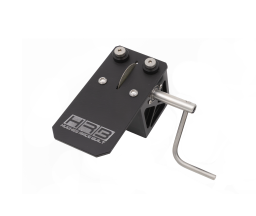
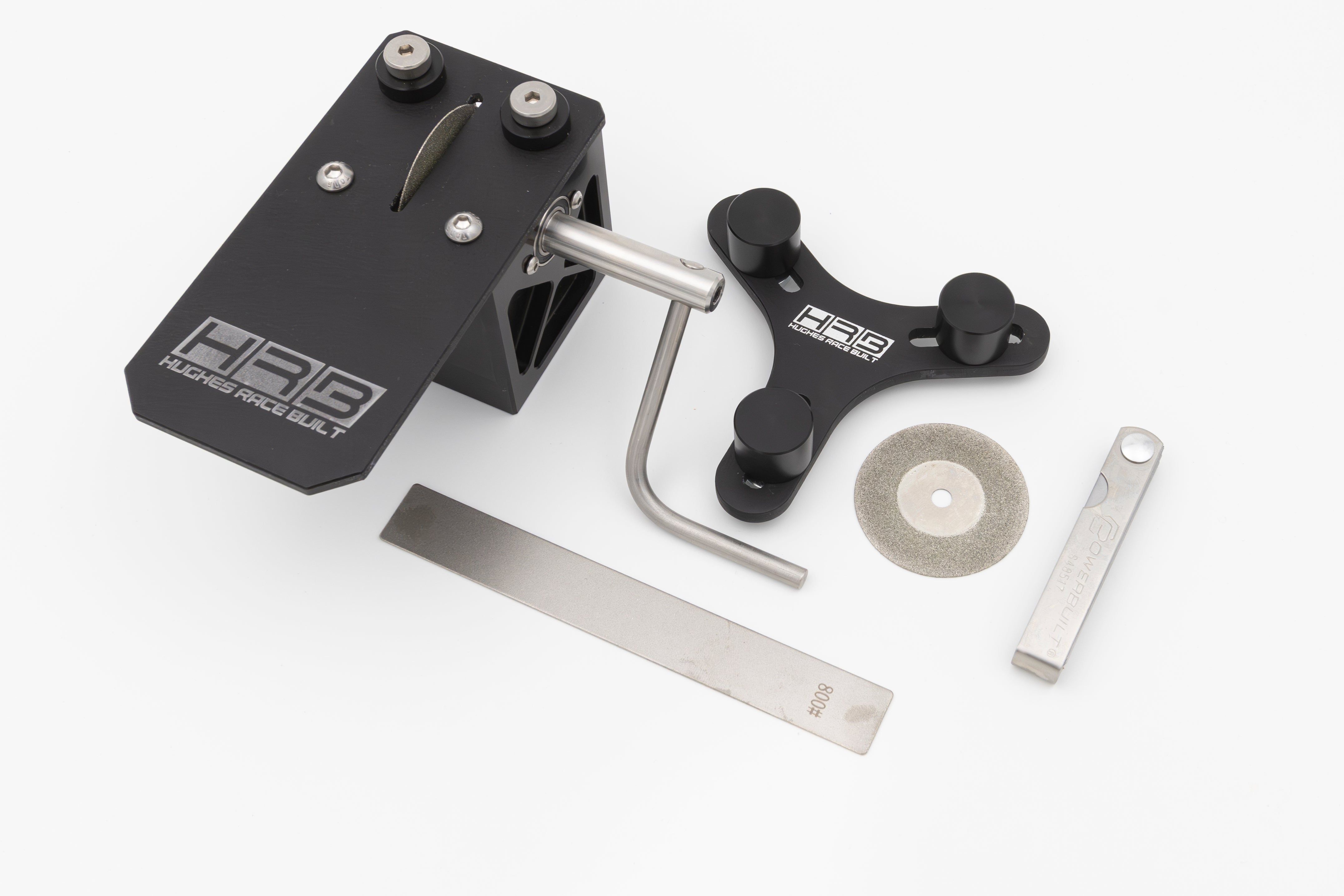
For accurate and repeatable results, we recommend the HRB Professional Piston Ring File Kit.
Developed by experienced engine builders, this kit removes guesswork by combining rigid construction with precision engineering.
Key Features
- Zero-backlash bearing shaft for smooth control
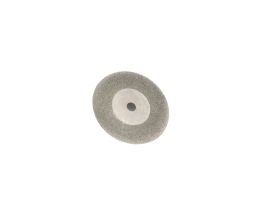
- Ultra-thin diamond wheel for precise material removal
- Parallel, even ring ends
- Billet alloy body for rigidity
- Stainless steel shaft for durability
The ultra-thin diamond wheel allows controlled material removal across the ring face, producing even, parallel gaps that are critical for optimal ring seal and long-term reliability.
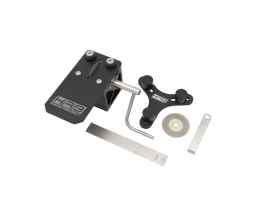
Kit Contents
- Wall mount storage bracket
- Precision ring file unit
- Ring squaring tool
- 800-grit diamond lapping file
- Spare diamond wheel
- Feeler blades
Correct Filing Process
- Determine your target gap using the Ring Gap Calculator.
- Install the ring in the HRB filing unit.
- Remove small amounts of material at a time.
- Lightly deburr using the 800-grit lapping file.
- Clean the ring thoroughly.
- Reinsert into its specific cylinder.
- Re-measure and repeat until exact gap is achieved.
Always sneak up on your final measurement. You cannot put material back once removed.
Best Practices for Performance Engine Builds
- Gap rings cylinder-by-cylinder.
- Keep rings labelled to each bore.
- Prioritise accuracy on the top ring.
- Re-measure multiple times.
- When unsure, err slightly larger rather than too tight in boosted applications.
Final Thoughts
File fit piston rings are not a complication — they are a precision tuning tool.
When correctly calculated and accurately filed, they deliver:
- Consistent cylinder sealing
- Improved combustion efficiency
- Reduced blow-by
- Long-term piston reliability
But if the top ring gap is too tight, it can break the ring land and destroy a piston in seconds under boost.
Use the Ring Gap Calculator, follow proper measurement procedures, and use professional tools like the HRB Ring File Kit to ensure precise, repeatable results in every build.