How to Remove a Harmonic Balancer Easily (No Drama, No Damage)
How to Remove a Harmonic Balancer Easily — Without the Drama
Harmonic balancers (aka crank dampers / crank pulleys) are one of those jobs that’s either:
- 10 minutes and done, or
- 2 hours of suffering while questioning every decision you’ve ever made.
There’s basically no in-between.
If you’ve ever tried to pull a balancer that feels like it’s been welded to the crankshaft, you already know the deal. You start the job thinking it’ll be quick, and then suddenly you’re fighting a stubborn damper with sweat in your eyes, the clock ticking, and the temptation to grab a pry bar (don’t).
This exact pain is why we’re excited to now carry the HRB Professional Hydraulic Balancer Puller Kit at Spool. If you’re doing engine work regularly — or even just building one car properly — this is one of those tools that pays for itself fast.
Why a Hydraulic Puller Changes Everything
Traditional mechanical pullers can work… but they’re also the reason so many balancers end up with:
- damaged threads
- bent puller plates
- chewed-up crank noses
- and a whole lot of new vocabulary
The problem is uneven force. A mechanical puller can load the balancer crooked, bind up, and suddenly you’re applying way more force than you should.
The HRB Hydraulic Balancer Puller solves that by using a smooth, controlled hydraulic action to pull the balancer off evenly. No hammering. No shock loads. No drama.
It turns a job that normally feels sketchy into something that feels clean, controlled, and professional.
Step-by-Step: Removing Your Harmonic Balancer Like a Pro
Tools You’ll Need
- HRB Hydraulic Balancer Puller Kit
- Socket and wrench set
- Engine-specific crank stop (included in the kit)
- Inspection light
1) Prep Your Workspace
Give yourself room at the front of the engine. This job is way easier when you’re not stepping over tools, bumping into fenders, or trying to work blind.
Clear space, get good lighting, and you’ll immediately save yourself time.
2) Select the Right Hardware
The HRB kit includes crank stops for a huge range of engines — everything from big-block V8s to compact JDM setups like the Toyota 4AGE.
Pick the crank stop that matches your application. If you’re unsure, take a second to compare your balancer bolt pattern to the supplied adapters.
This is one of those “measure twice, pull once” moments.
3) Install the Crank Stop
Install the crank stop onto the end of the crankshaft. This gives the hydraulic ram a solid, centered anchor point so the pull stays perfectly aligned.
Proper alignment is what keeps everything smooth — and prevents damage.
4) Position the Hydraulic Ram
Thread the hydraulic ram onto the crank stop, then position the billet puller plate against the harmonic balancer.
The billet steel puller plate is designed to sit flat and stay flat — which is a massive upgrade over the flexy universal puller setups most of us grew up with.
Adjust everything until snug and centered before applying pressure.
5) Remove the Balancer (The Easy Way)
Start turning the hydraulic ram handle slowly.
As pressure builds, the hydraulic mechanism pulls the balancer off the crankshaft smoothly and evenly. No jerking. No hammering. No praying.
Just controlled removal — the way it should be.
6) Inspect and Store
Once the balancer is off, inspect:
- the balancer bore
- the crankshaft nose
- the keyway (if applicable)
Because the pull is controlled and even, you’ll usually find everything comes off clean and stays in great condition.
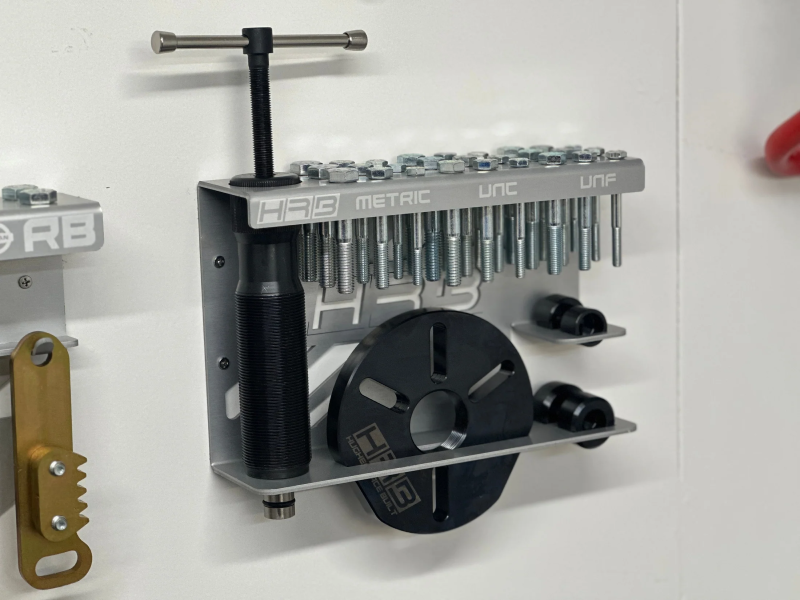
When you’re done, clean the kit and store it on the wall-mounted bracket. It’s a small detail, but it keeps everything organized and ready for next time.
Why Go Hydraulic? The Big Benefits
Using the HRB Hydraulic Balancer Puller isn’t just about making the job easier — it’s about protecting parts and working smarter.
- Zero Component Damage: Smooth hydraulic force avoids the shock loads that destroy threads and crank noses.
- Saves Serious Time: Faster setup and removal means you’re not wasting half your day on one stubborn damper.
- Versatile Fitment: Works across a huge range of engines including Chevy small-block & big-block, Ford Barra, Toyota JZ, Mitsubishi 4G63, Honda K-series, Nissan RB-series, and more.
- Built to Last: Made from billet 4140 steel with a durable black oxide coating — this is a “buy once” tool.
Tips From the Shop
- Always confirm the hydraulic ram and crank stop are fully threaded and centered before applying pressure.
- Use the included high-tensile washers to distribute load evenly and protect components.
- Keep your workspace tidy — finding the right adapter shouldn’t take longer than pulling the balancer.
Final Thoughts
Removing a harmonic balancer doesn’t need to be stressful, risky, or destructive. With the right hydraulic puller, the job becomes quick, clean, and repeatable — and your engine stays protected.
Whether you’re a professional engine builder, a restoration shop, or a serious DIY guy building your car properly, the HRB Hydraulic Balancer Puller Kit is one of those tools you’ll wonder how you lived without.
Ditch the drama. Pull it right the first time.
Spool is now an official HRB dealer — if you need the right kit for your platform, hit us up and we’ll get you sorted.