
Audi/VW EA113 vs EA888 Engine Guide
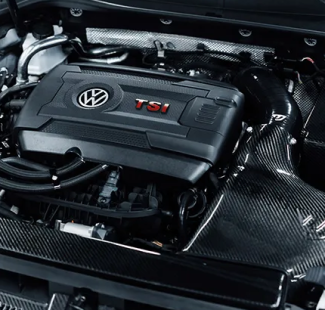
Audi & VW EA113 vs EA888 Engine Guide: Generations, Differences & Tuning Potential
If you own a turbocharged Audi, Volkswagen, Skoda, SEAT or Cupra from the last couple of decades, there is a good chance you have come across the terms EA113 or EA888.
Both engine families have powered some of the Volkswagen Audi Group's most popular performance cars, including various Golf GTI, Golf R, Audi A3, S3, TT, TTS, A4, Skoda Octavia RS and performance Cupra models.
But despite both commonly appearing as 1.8 or 2.0 litre turbocharged four-cylinder engines, the EA113 and EA888 are not simply different generations of exactly the same engine. There are significant differences in their timing systems, cylinder heads, fuel systems, connecting rods, piston pins, engine management and internal dimensions.
There are also several generations within the EA888 family itself, making correct engine identification particularly important when you're buying forged pistons, connecting rods or a complete engine rebuild kit.
In this guide we'll explain how to tell the EA113 and EA888 apart, identify the different EA888 generations, look at common engine codes, explain their important similarities and differences, discuss their tuning potential and cover what you need to consider when choosing forged internals for a performance build.
Quick Answer: One of the easiest starting points is that the turbocharged EA113 generally uses a timing belt, while the EA888 family uses a timing chain. However, the engine code should always be used for positive identification before ordering internal engine components.
Contents
- What are the EA113 and EA888?
- How to identify an EA113 or EA888
- EA113 and EA888 engine codes
- EA113 explained
- EA888 Gen 1
- EA888 Gen 2
- EA888 Gen 3
- EA888 Gen 3B
- EA888 Gen 4 / Evo4
- EA113 vs EA888 comparison
- EA113 and EA888 tuning potential
- When forged internals make sense
- Spool EA113 and EA888 H-Beam conrods
- Spool EA113 and EA888 rebuild kits
- Frequently asked questions
What Are the EA113 and EA888 Engines?
EA113 and EA888 are Volkswagen Group engine-family designations covering a range of four-cylinder petrol engines used across Volkswagen, Audi, Skoda, SEAT and Cupra vehicles.
For performance enthusiasts, the engines we are generally interested in are the turbocharged direct-injected 1.8 and 2.0 litre variants commonly marketed as FSI, TFSI or TSI.
The EA113 was the earlier performance platform and helped establish the modern Volkswagen Group turbocharged direct-injection formula in cars such as the Mk5 Golf GTI.
The EA888 was a substantially redesigned engine family that progressively replaced the EA113. It has since gone through several generations as Volkswagen Group improved emissions, efficiency, thermal management, fuel injection, turbocharger control and performance.
Importantly, there was an overlap period where Volkswagen Group was using EA113 and EA888 engines at the same time. Some higher-performance models continued using EA113 engines even after mainstream models had moved to the EA888 platform.
This is one reason why identifying an engine purely by vehicle year can cause problems.
How Do I Know Whether I Have an EA113 or EA888?
The most reliable starting point is simple:
Find your engine code.
Do not order pistons, rods or rebuild components based solely on the vehicle model, registration year, engine-cover badge or whether the car says TSI or TFSI.
Volkswagen Group used different engines across different countries and even within the same vehicle generation.
EA113 vs EA888 Physical Identification
| Feature | EA113 2.0 Turbo | EA888 |
|---|---|---|
| Main timing drive | Timing belt | Timing chain |
| Fuel injection | Direct injection | Direct injection, with some later versions also using port injection |
| Typical terminology | Often FSI / TFSI | Often TSI / TFSI |
| Engine architecture | Earlier VW Group turbo/direct-injection design | Later modular engine family with multiple generations |
These visual clues are useful, but engine code remains the preferred identification method.
Important: TSI and TFSI branding alone does not tell you which engine family or internal components you have. Audi and Volkswagen marketing terminology overlaps across different engines, models and markets.
EA113 and EA888 Engine Codes: Which Generation Do You Have?
Engine codes are one of the safest ways to identify exactly which EA113 or EA888 variant is fitted to your vehicle.
This matters because Volkswagen Group used different engines across different models, countries and production years. Two cars with similar badges and the same 2.0 TSI or TFSI description can use different engine generations and different internal components.
The following table covers many of the engine codes performance enthusiasts are likely to encounter. It is intended as a practical identification guide rather than an exhaustive list of every Volkswagen Group engine code produced.
| Engine Family | Common Engine Codes | Typical Applications | Notes |
|---|---|---|---|
| EA113 2.0 TFSI / FSI Turbo |
AXX BWA BWE BPY BHZ CDL / CDLA / CDLB / CDLC / CDLF |
VW Golf Mk5 GTI VW Golf Mk6 R VW Scirocco R Audi A3 8P Audi S3 8P Audi TT / TTS 8J Audi A4 B7 |
Belt-driven EA113 architecture. Higher-output CDL-series engines were used in several performance applications. |
| EA888 Gen 1 |
CAWA CAWB CCTA CBFA |
VW Golf Mk6 GTI VW Jetta / GLI VW Tiguan Selected Audi applications |
Early chain-driven EA888 architecture. CCTA and CBFA are particularly common in North American vehicles. |
| EA888 Gen 2 |
CCZA CCZB CCZC CCZD CAEA CAEB CAED CDAA CDAB CDNB CDNC CPMA CPMB |
VW Golf / GTI VW Passat VW Tiguan Audi A4 Audi A5 Audi Q5 Skoda and SEAT applications |
Continued development of the chain-driven EA888 platform. Exact specification varies significantly by engine code and market. |
| EA888 Gen 3 – 1.8 / 2.0 TSI & TFSI |
CJSA CJSB CJEB CJEE CHHA CHHB CULC CXCA CXCB |
VW Golf Mk7 GTI Skoda Octavia RS / vRS Audi A3 8V Audi A4 / A5 VW Passat Various MQB-platform vehicles |
Gen 3 introduced major changes including an integrated exhaust manifold, revised thermal management and electronic wastegate control. |
| EA888 Gen 3 – Higher Output |
CJXA CJXB CJXC CJXE CJXF CJXG |
VW Golf Mk7 R Audi S3 8V Audi TTS Selected Cupra and high-output MQB models |
Higher-output Gen 3 engines commonly associated with IS38 turbocharger applications. Internal and cylinder-head specifications can differ from lower-output Gen 3 engines. |
| EA888 Gen 3B | Various market-specific engine codes |
Audi A4 / A5 VW Passat Selected longitudinal and efficiency-focused applications |
Efficiency-focused development using a modified combustion strategy often referred to by Audi as the B-cycle. |
| EA888 Gen 4 / Evo4 | Various later-generation engine codes depending on market and application |
VW Golf Mk8 GTI VW Golf Mk8 R Audi S3 8Y Cupra Leon / Formentor Other MQB Evo applications |
Latest major evolution of the EA888 platform with revised turbocharging, higher-pressure fuel injection, emissions systems and engine management. |
Important: Engine-code lists and specifications vary between markets, and Volkswagen Group introduced numerous running changes. An engine code should be used as a starting point for correct identification, but critical dimensions should still be confirmed before ordering internal engine components.
Common Performance Engine Codes Worth Knowing
AXX and BWA – EA113
AXX and BWA are among the most commonly encountered EA113 2.0 turbo engines in Mk5 Golf GTI and related Volkswagen Group applications.
These are belt-driven EA113 engines and should not be confused with the later chain-driven EA888 units.
CDL / CDLA / CDLC / CDLF – High-Output EA113
The CDL family is particularly well known among performance enthusiasts. Various CDL versions were used in cars such as the Golf R, Scirocco R, Audi S3 and TTS.
These remain EA113 engines despite appearing in some vehicles produced at the same time that other Volkswagen models had already moved to EA888 engines.
That overlap is one of the best examples of why vehicle year alone cannot reliably identify an EA113 or EA888.
CCTA and CBFA – Early EA888
CCTA and CBFA are common early EA888 engine codes, particularly in North American applications. They belong to the chain-driven EA888 family rather than the earlier belt-driven EA113 architecture.
CCZA and CCZB – EA888 Gen 2
CCZA and CCZB are common EA888 Gen 2 codes found across Volkswagen, Audi, Skoda and SEAT applications and are frequently encountered in vehicles from the early 2010s.
CHHA and CHHB – EA888 Gen 3
CHHA and CHHB are commonly associated with Mk7-era Golf GTI and related performance applications.
They form part of the third-generation EA888 family and use the later integrated-exhaust-manifold architecture.
CJXB and CJXC – EA888 Gen 3 Golf R and Audi S3
CJXB and CJXC are particularly relevant to Australian performance enthusiasts because they are commonly encountered in Mk7 Golf R and Audi S3 applications.
These are higher-output EA888 Gen 3 engines and differ in several areas from lower-output versions of the Gen 3 engine.
CJXA, CJXE, CJXF and CJXG – Other High-Output EA888 Gen 3 Variants
These codes are also found within the high-output EA888 Gen 3 family and are associated with various Volkswagen Group performance models.
Where Can I Find My VW or Audi Engine Code?
Depending on the vehicle, the engine code may be found:
- On the vehicle data sticker in the service documentation
- On a vehicle data label in the luggage compartment or spare-wheel area
- Stamped or labelled on the engine itself
- Through dealer or workshop diagnostic systems using the VIN
If you cannot confidently identify the engine, contact Spool Imports with your vehicle details and engine code before ordering internal components.
EA113: The Original Modern VW/Audi Performance Four-Cylinder
The turbocharged EA113 became famous through cars such as the Mk5 Golf GTI and a number of Audi performance models.
It combines turbocharging with direct fuel injection and has developed a strong following among tuners because of its relatively straightforward architecture and considerable performance potential.
Common EA113 Characteristics
- Turbocharged four-cylinder configuration
- Direct fuel injection
- Timing-belt driven main camshaft system
- Strong aftermarket support
- Available in several different factory performance specifications
- Widely used for upgraded turbo and forged-engine builds
Higher-output EA113 variants were fitted to some serious factory performance cars, helping establish the engine's reputation as a strong tuning platform.
EA113 Areas to Watch
Anyone modifying an EA113 should also understand the engine's known maintenance requirements.
One commonly discussed area is wear of the high-pressure fuel-pump cam follower on applicable engines. Because the high-pressure fuel pump is mechanically driven, cam-follower condition is an important maintenance consideration on these engines.
Carbon accumulation on the intake valves is another consideration on direct-injection engines, while timing-belt condition and service history should obviously be checked before pushing an older engine harder.
EA888 Generation 1
The EA888 represented a new engine architecture rather than simply a small update to the EA113.
One of the immediately noticeable differences was the move to a chain-driven timing system.
Early EA888 engines introduced many of the fundamental design concepts that would continue to evolve through later generations.
EA888 Gen 1 Highlights
- Chain-driven camshafts
- Direct fuel injection
- Turbocharged 1.8 and 2.0 litre variants
- Greater focus on emissions and fuel economy
- Different internal architecture from the EA113
Early EA888 engines can respond very well to tuning, but condition and maintenance history become particularly important when dealing with older examples.
EA888 Generation 2
Generation 2 continued the development of the EA888 platform rather than completely replacing its basic architecture.
Depending on application and market, changes included developments in the cylinder head, valvetrain, emissions systems and overall efficiency. Certain Audi configurations also used the Audi Valvelift System, or AVS.
As with every generation discussed here, identifying the actual engine code is more useful than assuming every car manufactured within a particular year uses exactly the same specification.
EA888 Gen 1 and Gen 2 Tuning
These engines respond strongly to ECU calibration, intake, exhaust, intercooler and turbo upgrades.
However, once boost, torque and cylinder pressure begin moving substantially beyond factory levels, the condition and specification of the rotating assembly become increasingly important.
That is especially relevant for engines being built specifically for motorsport, high-boost use, larger turbochargers or repeated high-load operation.
EA888 Generation 3: A Major Step Forward
EA888 Gen 3 is arguably the generation that transformed the EA888 into one of the most popular modern European tuning platforms.
Volkswagen Group introduced substantial engineering changes including an exhaust manifold integrated into the cylinder head, revised thermal management and a more compact turbocharger arrangement with electronic wastegate control.
Some Gen 3 applications also use both direct and port fuel injection, although fuel-system configuration varies by application and market.
EA888 Gen 3 Highlights
- Integrated exhaust manifold within the cylinder head
- Electronic turbocharger wastegate control
- Advanced thermal management
- Revised engine architecture
- Direct injection with additional port injection on applicable variants
- Extensive factory and aftermarket turbocharger development
Applications include various versions of the Mk7 Golf GTI and Golf R, Audi A3 and S3 and numerous related Volkswagen Group models.
Why Tuners Like the EA888 Gen 3
The combination of a responsive factory turbo system, sophisticated engine management and a huge aftermarket means significant performance gains can be achieved without immediately opening the engine.
Beyond that point, hybrid and larger turbocharger combinations can move the engine into a very different performance category.
At those levels, forged pistons and rods become attractive for builders looking for increased safety margin and an engine specifically designed around higher boost, torque and cylinder pressure.
What Is the EA888 Gen 3B?
EA888 Gen 3B is an efficiency-focused development of the third-generation platform found in selected applications.
A significant feature is Volkswagen Group's modified combustion strategy, often referred to by Audi as the B-cycle. It uses altered valve timing and a higher geometric compression ratio together with turbocharging to improve efficiency at part load while retaining strong performance when required.
Gen 3B should therefore not automatically be treated as identical to a conventional high-output Gen 3 engine when selecting internal parts.
EA888 Generation 4 / Evo4
The fourth major evolution of the EA888 is commonly called EA888 evo4.
It appears in newer Volkswagen Group performance cars including Mk8-generation Golf GTI and Golf R applications, along with related Audi and Cupra models in applicable markets.
The fundamental EA888 concept remains, but the engine has continued to evolve in areas including fuel delivery, turbocharging, emissions control, combustion efficiency and engine management.
Modern evo4 applications can use direct-injection pressures of up to approximately 350 bar, illustrating how far the fuel system has developed from earlier generations.
Once again, do not assume that internal engine components intended for an earlier EA888 automatically fit an evo4. Confirm the engine code, application and required dimensions before ordering.
EA113 vs EA888: Key Differences
| Feature | EA113 | EA888 |
|---|---|---|
| Engine generation | Earlier VW/Audi direct-injection turbo platform | Successor engine family with multiple generations |
| Main timing system | Timing belt | Timing chain |
| Fuel system | Direct injection | Direct injection; selected later versions also use port injection |
| Turbo arrangement | Earlier external exhaust-manifold arrangement | Progressively evolved; Gen 3 introduced integrated exhaust-manifold architecture |
| Thermal management | Conventional earlier-generation system | Increasingly sophisticated through later generations |
| Aftermarket support | Excellent | Excellent, particularly Gen 3 |
| Forged engine potential | Excellent | Excellent, subject to exact generation and engine code |
How Much Tuning Potential Do EA113 and EA888 Engines Have?
There isn't one meaningful horsepower number that can be applied to an entire EA113 or EA888 engine family.
Power capability depends on factors including:
- Exact engine code
- Factory piston and connecting-rod specification
- Engine condition and mileage
- Turbocharger size and efficiency
- Boost pressure
- Fuel type and octane
- Fuel-system capacity
- Charge-air temperature
- Ignition timing
- Maximum engine speed
- Torque delivery
- ECU calibration quality
- Vehicle use
A road car making a particular peak horsepower figure for a short dyno pull is a very different proposition from a circuit car running at high load for an extended period.
This is also why looking at torque and cylinder pressure can be just as important as concentrating on a headline horsepower figure.
Stage 1 ECU Tuning
Both engine families generally respond strongly to ECU tuning when the engine is healthy and the calibration is designed for the available fuel.
Modern turbocharged engines can often produce worthwhile gains through software because boost control, ignition timing, fuelling and torque management can all be recalibrated.
Stage 2 and Supporting Modifications
Improved intercooling, intake flow and exhaust flow can allow further increases in boost and sustained performance.
Supporting modifications become increasingly important as power rises because producing power repeatedly and reliably is very different from achieving a peak dyno number.
Upgraded and Hybrid Turbochargers
This is where engine specification becomes much more important.
Hybrid and larger turbochargers can dramatically increase airflow and torque. Increased cylinder pressure also increases load on pistons, connecting rods, bearings, fasteners, the crankshaft and head sealing.
At this point, many builders choose to move from simply modifying a standard engine to building an engine specifically for the intended power level.
When Should You Fit Forged Pistons and Conrods?
There is no universal horsepower point where every EA113 or EA888 requires forged internals.
Instead, consider the whole combination.
A forged engine becomes increasingly sensible when you are:
- Installing a larger or significantly higher-flow turbocharger
- Running substantially increased boost
- Targeting substantially increased torque
- Using ethanol or other fuels that allow increased boost and cylinder pressure
- Raising the engine's RPM limit
- Building for circuit, drag or sustained motorsport use
- Rebuilding an engine after mechanical damage
- Building the engine once with future power upgrades in mind
A quality forged rotating assembly can provide considerably more engineering margin than asking standard production parts to operate well outside their intended design window.
It is important to remember, however, that forged components cannot compensate for poor machining, incorrect clearances, inadequate fuel supply or a poor calibration.
Spool H-Beam Conrods for EA113 and EA888 Engines
Spool Imports offers forged 4340 steel H-Beam connecting rods for both EA113 and EA888 applications.
Spool H-Beam rods are manufactured for performance street, track and turbocharged applications and come standard with genuine ARP2000 rod bolts.
Depending on the application, upgraded fastener options are also available.
Spool EA113 vs EA888 Conrod Specifications
| Specification | Spool EA113 | Spool EA888 |
|---|---|---|
| Material | 4340 forged steel | 4340 forged steel |
| Design | H-Beam | H-Beam |
| Centre-to-centre length | 144 mm | 144 mm |
| Small-end / piston pin | 21 mm | 22 mm |
| Big-end bore | Approx. 50.6 mm | Approx. 50.6 mm |
| Big-end width | Approx. 24.90 mm | Approx. 21.89 mm |
| Standard fastener | ARP2000 | ARP2000 |
This is an important fitment difference. EA113 and EA888 rods may look similar and share a 144 mm centre-to-centre length, but the listed applications have different piston-pin diameters and big-end widths. Do not assume they are interchangeable simply because both engines are 2.0 litre VW/Audi turbo engines.
Spool H-Beam Conrod Features
- High-tensile 4340 forged steel
- Two-piece forging
- Dowelled caps for accurate alignment
- Heat treated
- Shot peened
- Magnaflux inspected
- X-ray and sonic tested
- Vacuum-degassed material
- Weight-matched sets
- Genuine ARP2000 fasteners as standard
View Spool Audi/VW EA113 H-Beam Conrods
EA113 and EA888 Forged Conrod & Piston Kits
For builders wanting a matched forged bottom-end combination, Spool also offers Spool H-Beam conrod and CP forged piston packages.
EA113 Forged Conrod & Piston Kit
The EA113 package combines Spool H-Beam rods with CP forged pistons designed for the applicable 1984 cc belt-driven EA113 configuration.
Combining rods and pistons into a matched package also makes it easier to ensure the piston-pin specification and other critical dimensions are correct for the intended build.
View EA113 Spool H-Beam Conrod & CP Piston Kit
EA888 Forged Conrod & Piston Kit
A corresponding EA888 package is available using the applicable narrower EA888 connecting-rod big-end specification with CP forged pistons.
View EA888 Spool H-Beam Conrod & CP Piston Kit
Complete Spool EA113 and EA888 Rebuild Kits
If the engine is already apart, buying individual rods and pistons is often only part of the job.
Spool offers rebuild packages that combine many of the major components required for a performance bottom-end rebuild.
EA113 Rebuild Kit
Depending on the options selected, the Spool EA113 rebuild kit can include:
- Spool forged H-Beam connecting rods
- Genuine ARP2000 rod bolts
- CP forged pistons
- Piston rings, pins and locks
- Performance main bearings
- Performance connecting-rod bearings
- MLS head gasket
- Selected fastener upgrades and options
View the Spool EA113 Rebuild Kit
EA888 Rebuild Kit
Spool's EA888 rebuild package combines Spool forged connecting rods with CP forged pistons and complementary rebuild components for applicable EA888 engines.
Because there are multiple EA888 generations and engine specifications, always confirm your engine code and application before ordering.
View the Spool EA888 Rebuild Kit
You can also browse the complete range of Spool Imports Engine Rebuild Kits.
Why Engine Code Matters When Buying Forged Internals
Knowing that your engine is an EA888 is not necessarily enough when ordering forged pistons, connecting rods or a complete rebuild kit.
Different EA888 variants can have differences in:
- Piston-pin diameter
- Connecting-rod width
- Piston compression height
- Compression ratio
- Cylinder-head configuration
- Turbocharger specification
- Fuel-injection system
- Crankshaft and bearing specification
- Emissions equipment
This is why Spool recommends confirming the engine code and critical internal dimensions before ordering EA113 or EA888 forged engine components.
Which Is Better: EA113 or EA888?
There isn't really a single winner.
The EA113 is well proven, relatively simple by modern standards and remains an excellent platform for performance builds.
The EA888 represents a newer architecture with major improvements in efficiency, thermal management and engine control. Gen 3 in particular has developed an enormous performance aftermarket and is capable of producing extremely impressive results.
EA888 evo4 takes that development even further.
For a performance engine builder, the better question is not simply:
"EA113 or EA888?"
It is:
"Which exact engine do I have, what power and torque am I targeting, and what components do I need to reliably support that combination?"
Before Ordering EA113 or EA888 Engine Parts
There are numerous engine codes and variations within the Volkswagen Audi Group range.
Before ordering internal engine components, confirm:
- Vehicle model
- Vehicle year
- Engine code
- Engine capacity
- Existing piston-pin diameter where required
- Connecting-rod big-end width where required
- Bore size
- Required compression ratio
- Intended fuel
- Turbocharger combination
- Target power, torque and RPM
- Intended street, drag, circuit or motorsport use
If you are unsure which components suit your Audi or Volkswagen engine, contact Spool Imports before ordering.
Phone: +61 7 5645 1333
Email: [email protected]
Frequently Asked Questions About EA113 and EA888 Engines
What is the main difference between an EA113 and EA888 engine?
One of the easiest identifying differences is the timing system. The turbocharged EA113 generally uses a timing belt for its main camshaft drive, while EA888 engines use a timing-chain system. The EA888 is also a newer engine architecture that evolved through several generations.
Is a VW TSI engine always an EA888?
No. TSI is a marketing designation and should not be used by itself to identify an engine family or internal component specification. Always confirm the engine code.
Is an Audi TFSI engine always an EA888?
No. Audi has used the TFSI designation across multiple engine families, including EA113 and EA888 applications. Check the engine code before ordering parts.
How can I quickly tell an EA113 from an EA888?
A turbocharged EA113 generally has a timing belt while an EA888 uses a timing chain. This is a useful initial clue, but the engine code is the preferred method of positive identification.
Is a BWA engine EA113 or EA888?
The BWA 2.0 turbo engine belongs to the EA113 family. It is a belt-driven direct-injection turbo engine commonly associated with Mk5 Golf GTI and related Volkswagen Group applications.
Is a CCZB engine EA113 or EA888?
CCZB belongs to the EA888 family and is generally classified as an EA888 Gen 2 engine. It is a chain-driven 2.0 turbo engine used across various Volkswagen Group applications.
Is a CJXC an EA888 Gen 3 engine?
Yes. CJXC is a high-output EA888 Gen 3 engine code commonly associated with performance applications such as the Mk7 Golf R and related Volkswagen Group vehicles.
Are EA113 and EA888 connecting rods interchangeable?
Not simply because both engines are 2.0 litre VW/Audi turbo engines. Spool's listed EA113 and EA888 rods are both 144 mm centre-to-centre, but the EA113 rod uses a 21 mm piston pin and approximately 24.90 mm big-end width, while the listed EA888 version uses a 22 mm pin and approximately 21.89 mm big-end width. Always confirm the exact application and dimensions.
Are Spool EA113 and EA888 conrods forged?
Yes. Spool H-Beam connecting rods for these applications are manufactured from high-tensile 4340 forged steel and supplied with genuine ARP2000 fasteners as standard.
Which EA888 generation is best for tuning?
All EA888 generations can respond to performance modifications, but EA888 Gen 3 has become particularly popular because of its strong factory performance, efficient turbo system and extensive aftermarket support. The best platform depends on the vehicle, engine code and intended build.
Can I make more power with a standard EA113 or EA888 engine?
Yes. Healthy EA113 and EA888 engines commonly respond well to ECU calibration and supporting modifications. The amount of power safely achievable depends on engine specification, condition, fuel, boost, torque, RPM, turbocharger, cooling and tune quality.
At what horsepower do I need forged rods?
There is no universal horsepower limit. Connecting-rod load is affected by torque, cylinder pressure, RPM, piston weight, fuel, turbocharger characteristics, calibration and the way the vehicle is used. A high-torque engine can place considerably more load on components than peak horsepower alone suggests.
Does Spool sell complete EA113 and EA888 rebuild kits?
Yes. Spool Imports offers EA113 and EA888 rebuild-kit options incorporating forged connecting rods, CP forged pistons, bearings, head-gasket components and selected fastener options.
How do I know which EA888 generation I have?
Use the engine code rather than relying only on vehicle year, model or TSI/TFSI badging. Volkswagen Group applications overlap between countries and model generations, so engine-code identification is the safest starting point when ordering performance internals.
Final Word
The EA113 and EA888 have become two of the most important four-cylinder performance engine families produced by Volkswagen Group.
The EA113 established the turbocharged direct-injection formula, while successive EA888 generations have added increasingly sophisticated engine management, fuel injection, turbocharging, combustion and thermal-management technology.
Both can make excellent foundations for a performance build.
The important part is knowing exactly which engine you have and building the rotating assembly, fuel system, turbocharger and calibration around the intended use rather than chasing a horsepower number in isolation.
Whether you're freshening up a street engine or putting together a serious high-boost EA113 or EA888 combination, Spool Imports can supply forged connecting rods, CP forged pistons, bearings, fasteners and complete rebuild packages to suit a wide range of Volkswagen and Audi performance applications.
Disclaimer: This article is intended as a general guide only. Volkswagen Audi Group produced many engine codes, regional specifications and running changes within the EA113 and EA888 families. Always confirm your exact engine code and physically verify critical dimensions where required before ordering engine internals. Performance capability depends on engine condition, machining, assembly quality, component selection, fuel, turbocharger selection, ECU calibration, RPM, boost, torque and vehicle use. No horsepower or torque figure should be treated as a guaranteed component limit. For application-specific advice, contact Spool Imports before ordering.

