Ford Ranger & Mazda BT-50 P4AT/P5AT Oil Pump Upgrades: What You Need to Know
Ford Ranger & Mazda BT-50 P4AT/P5AT Oil Pump Upgrades: What You Need to Know
The Ford Ranger and Mazda BT-50 fitted with the 2.2L P4AT and 3.2L P5AT diesel engines have earned a reputation as capable and durable workhorses. However, there is one part of the lubrication system that owners, workshops and engine builders need to understand: the factory vane-style oil pump.
Unlike a conventional gear-type oil pump, the factory variable-pressure vane pump can be susceptible to loss of prime. It can also suffer mechanical wear or failure of the internal vane mechanism. Either problem can result in loss of oil pressure — and an engine running without adequate oil pressure can sustain severe damage very quickly.
For this reason, replacing the original vane pump with a gear-type oil pump upgrade is increasingly considered a worthwhile reliability upgrade, particularly during an engine rebuild or whenever the original oil pump is already being replaced.
View the Ranger & BT-50 Gear Oil Pump Upgrade
Which Engines Are We Talking About?
The oil pump issue discussed here relates primarily to the Ford/Mazda Duratorq-family diesel engines used in Ranger and BT-50 applications:
| Engine | Capacity | Configuration | Common Applications |
|---|---|---|---|
| P4AT | 2.2L Turbo Diesel | 4-cylinder | Ford Ranger, Mazda BT-50 |
| P5AT | 3.2L Turbo Diesel | 5-cylinder | Ford Ranger, Ford Everest, Mazda BT-50 |
These engines were extensively used in Australian Rangers and BT-50s from the early 2010s, meaning there is now a substantial population of engines with considerable kilometres on them.
Understanding the Factory Vane-Style Oil Pump
The factory system uses a variable-pressure vane-style oil pump. Rather than simply producing oil flow using a conventional pair of gears, the vane pump is designed to vary its output according to engine operating requirements.
There are advantages to variable oil pressure. Reducing unnecessary pumping losses can improve engine efficiency and fuel consumption. The problem is that the design introduces additional complexity and, in these engines, has become associated with two important concerns:
- Difficulty self-priming after the lubrication system has been drained.
- Mechanical wear or failure within the vane pump itself.
Both matter because virtually every critical rotating component inside the engine relies on a continuous supply of pressurised engine oil.
The Famous Ranger & BT-50 "10-Minute Oil Change" Trap
This is one of the most important things for owners and technicians to understand.
The factory vane-style pump can lose its prime if the engine oil is allowed to drain for too long.
It is commonly known throughout the industry as the 10-minute oil-change rule. Some engine specialists recommend an even shorter window.
If the sump is left draining for an extended period, oil can drain from the pump and lubrication circuit. Air can then become trapped in the vane pump. Unlike a conventional gear pump, the vane pump may have difficulty overcoming this airlock and drawing oil back through the pickup.
Important: If the engine is restarted and oil pressure does not establish immediately, do not continue running it hoping the pressure will eventually appear. The cause needs to be investigated before the engine is allowed to continue running.
Why Loss of Oil Pressure Is So Serious
An engine does not need to operate without oil pressure for very long before significant damage can occur.
The pressurised lubrication system supplies components including:
- Crankshaft main bearings
- Connecting rod bearings
- Camshaft and valvetrain components
- Turbocharger bearings
- Other lubricated engine components and oil galleries
If the oil pump fails to establish pressure, the hydrodynamic oil film separating the crankshaft journals from the bearings can disappear. Metal-to-metal contact can then damage the bearings and crankshaft, potentially turning an oil-pump problem into a complete engine rebuild.
That makes the oil pump a relatively inexpensive component compared with the consequences of lubrication failure.
The Second Problem: Vane Pump Failure
Loss of prime is not the only reason workshops replace these pumps.
The internal vane mechanism itself can wear or fail. A mechanical pump failure while the engine is operating can cause an immediate reduction or complete loss of oil pressure.
This is particularly concerning because the vehicle may otherwise be running normally immediately before the failure.
For a high-kilometre engine, an engine being rebuilt, or an engine already apart for another major repair, there is therefore a reasonable argument for addressing the oil pump while access is available rather than reinstalling the original vane-style arrangement.
Gear Oil Pump vs Factory Vane Oil Pump
A gear-type pump approaches the problem differently.
Instead of using the factory vane arrangement, a conventional gear pump uses rotating internal gears to create displacement and move oil from the sump into the engine's lubrication circuit.
| Feature | Factory Vane Pump | Gear-Type Upgrade |
|---|---|---|
| Pump design | Variable-pressure vane | Positive-displacement gear type |
| Self-priming characteristics | Can be difficult to re-prime if oil drains from pump | More conventional and reliable self-priming characteristics |
| Internal design | Vanes and variable-pressure mechanism | Internal gears |
| Oil-change drain-time concern | Known concern | Avoids the characteristic vane-pump priming issue |
| Suitable as rebuild upgrade | OE-style replacement | Yes — particularly where improved reliability is the objective |
Why Consider a Gear Oil Pump Upgrade?
There is nothing unusual about gear oil pumps. They are a well-established positive-displacement pump design that has been used in engine lubrication systems for decades.
The primary reason for converting a P4AT or P5AT isn't about chasing a performance number. It is about lubrication-system reliability.
A quality gear-type conversion offers several practical advantages:
- Eliminates reliance on the original vane-style pumping mechanism.
- Provides more dependable self-priming characteristics.
- Removes the characteristic drain-time concern associated with the factory vane pump.
- Provides stable oil delivery through a mechanically straightforward gear design.
- Makes particular sense when rebuilding an engine and replacing the oil pump anyway.
For Rangers and BT-50s used for towing, off-road driving, commercial work, fleet operation or performance applications, improving the reliability of the lubrication system can be particularly worthwhile.
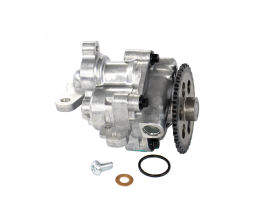
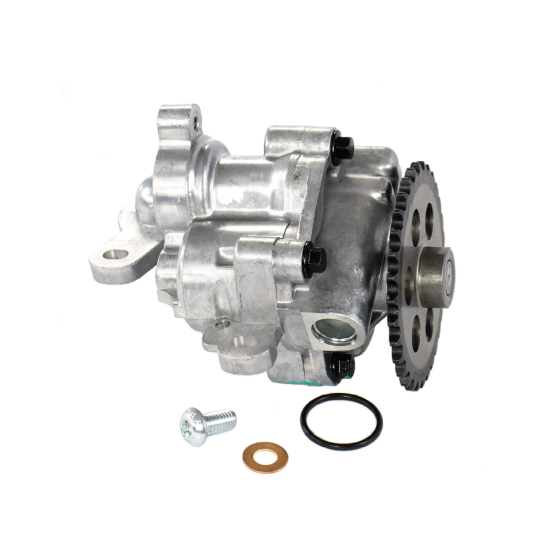
The Spool Imports P4AT/P5AT Gear Oil Pump Upgrade
Spool Imports supplies a gear-type oil pump upgrade for the Ford Ranger and Mazda BT-50 P4AT 2.2L and P5AT 3.2L engines.
The upgrade replaces the factory vane-style pump with a gear-type design intended to provide more consistent oil delivery and improved long-term reliability.
The kit includes the required installation hardware and O-ring. As part of the conversion, the original oil-pressure pipe from the pump to the cradle is deleted and the supplied fastener and washer must be installed correctly.
Depending on the particular application, minor modification to the sump/oil-pan baffle may also be required to provide clearance for the gear pump housing.
Shop P4AT & P5AT Gear Oil Pump Upgrade
Crucial Installation Advice: Don't Ignore Pump Alignment
Changing the pump design does not mean installation becomes unimportant.
The P4AT/P5AT oil pump is chain-driven from the crankshaft. Correct positioning of the pump and sprocket relative to the drive chain is therefore critical.
If the pump is installed out of alignment, the chain can run out of square. This can increase wear on the chain and sprockets and potentially create another reliability problem.
Workshop Tip: Use the correct oil pump alignment procedure.
Before tightening the pump into its final position, ensure the oil pump sprocket is correctly aligned with the existing drive-chain path. A purpose-designed oil pump alignment tool is the preferred method when carrying out this conversion.
Correct alignment is especially important because simply bolting the pump to the block does not guarantee that the sprocket and chain are running perfectly square.
Prime the New Pump Correctly
Although a gear pump has substantially better self-priming characteristics than the original vane arrangement, a newly installed pump should still be prepared correctly before first start-up.
Assembly lubricant should be applied to the pump during installation so the pump is not attempting its first rotation completely dry.
After installation or an engine rebuild, normal professional engine-building procedures should also be followed to establish and verify oil pressure before the engine is placed under load.
Never assume that because a new oil pump has been installed, oil pressure is automatically correct. Oil pressure should always be confirmed.
When Should You Upgrade the Oil Pump?
You don't necessarily need to dismantle an otherwise healthy engine solely to change the pump. However, there are several situations where installing a gear-type pump makes considerable sense:
- During an engine rebuild — the pump is already accessible and replacement is relatively inexpensive compared with the overall build.
- When replacing a failed or suspect oil pump — rather than replacing the problematic design with another vane-style pump.
- When carrying out major bottom-end work — particularly if access to the pump is already available.
- For high-kilometre engines where the condition of the original pump is questionable.
- For hard-working vehicles used for towing, commercial work or sustained off-road operation.
- For modified engines where protecting the investment in the engine becomes even more important.
Should You Fit Another Factory Pump or Upgrade?
If the factory pump requires replacement, there are essentially two approaches: install another vane-style pump or convert to a gear-type pump.
A replacement vane pump maintains the original oiling-system design, but it also retains the characteristics that make these pumps sensitive to loss of prime.
A gear-type conversion changes the fundamental pumping mechanism and therefore addresses the problem rather than simply replacing the existing pump with another unit of the same basic design.
For an engine that is already apart, particularly during a rebuild, Spool considers the gear-type pump the more sensible long-term solution.
Don't Let a Small Component Destroy an Expensive Engine
Oil pressure is fundamental to engine survival. The P4AT and P5AT are capable engines, but their factory vane-style oil pump has a characteristic that owners and workshops need to understand.
If retaining the original vane pump, be particularly careful during oil changes and any procedure where the lubrication system is drained. Do not leave the sump draining unnecessarily, and never continue running the engine if oil pressure fails to establish immediately after restart.
If the pump is being replaced — especially during an engine rebuild — a gear-type oil pump upgrade provides an opportunity to eliminate the vane-pump priming issue altogether.
Whichever route you choose, correct installation matters. Pump preparation, oil-system configuration and particularly oil pump sprocket/chain alignment need to be treated as precision engine-assembly procedures rather than simply bolting on a replacement component.
View the Spool Ranger & BT-50 Oil Pump Upgrade
Frequently Asked Questions
Why does the Ford Ranger 3.2 oil pump lose its prime?
The factory P5AT 3.2L engine uses a vane-style oil pump. If oil is allowed to drain from the lubrication system for too long, air can enter the pump and it may have difficulty self-priming when the engine is restarted. This is the reason for the commonly referenced Ranger "10-minute oil change" rule.
Does the Ford Ranger 2.2 have the same oil pump problem?
The P4AT 2.2L engine also uses the vane-style pump design and can experience similar priming concerns. Gear-type oil pump upgrades are available for both the P4AT 2.2L and P5AT 3.2L engines.
Does the Mazda BT-50 have the same oil pump as the Ford Ranger?
BT-50 models fitted with the P4AT 2.2L and P5AT 3.2L engines share the relevant engine architecture with their Ford Ranger counterparts and use the vane-style oil pump arrangement discussed in this article.
What happens if a P5AT or P4AT oil pump loses prime?
The pump may fail to establish normal oil pressure when the engine is restarted. Continuing to run the engine without adequate oil pressure can quickly damage crankshaft and connecting-rod bearings, the turbocharger and other lubricated components.
How long can you drain the oil on a Ford Ranger 3.2?
The issue is commonly referred to as the "10-minute rule", although some engine specialists recommend an even shorter drain period. The safest approach when retaining the factory vane pump is to minimise the time the lubrication system is left drained and follow the correct service procedure.
Is a gear oil pump better for a P5AT or P4AT?
A gear-type pump eliminates reliance on the original vane-style pumping mechanism and provides more dependable self-priming characteristics. It is particularly worth considering when an engine is being rebuilt or the original oil pump already requires replacement.
Do I need an alignment tool when replacing a Ranger or BT-50 oil pump?
Correct oil pump sprocket and drive-chain alignment is important. Because the pump is chain-driven from the crankshaft, incorrect alignment can cause the chain to run out of square and increase chain and sprocket wear. A purpose-designed alignment tool or equivalent manufacturer-approved alignment procedure should be used.
Does the gear oil pump need to be primed before installation?
Yes. Assembly lubricant should be applied during installation according to the pump manufacturer's instructions. After installation, oil pressure should be established and verified before the engine is placed under load.
Does the Spool gear oil pump require modifications?
Depending on the vehicle and sump configuration, minor modification to the oil-pan baffle may be required to provide clearance for the upgraded pump housing. The original oil-pressure pipe from the pump to the cradle is also deleted as part of the conversion and the supplied fastener and washer must be correctly installed.
When is the best time to upgrade a P5AT or P4AT oil pump?
An engine rebuild is an ideal opportunity because the engine is already dismantled and the pump is accessible. It is also worth considering whenever the original pump requires replacement or major bottom-end repairs are being performed.