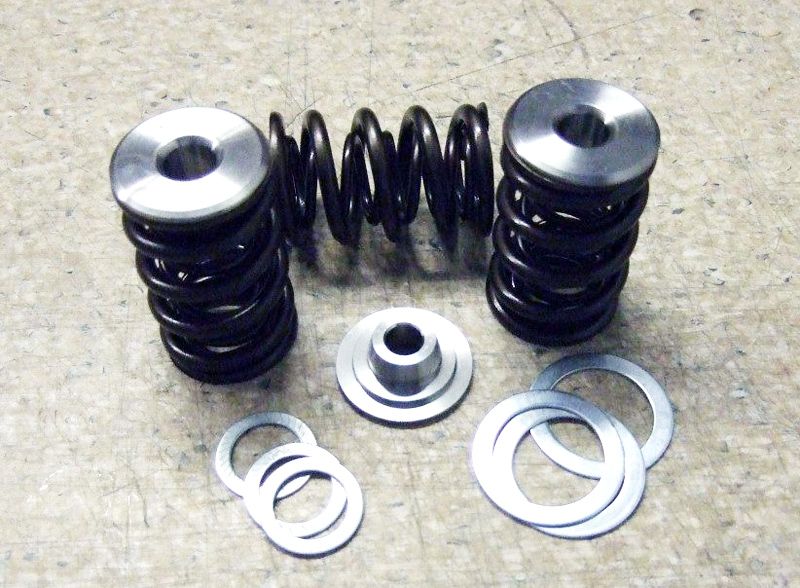
Titanium Valve Spring Retainers: What They Are and Why They Matter
A practical upgrade for high-RPM reliability, valve control, and performance
If you’ve ever built (or planned) a performance cylinder head, you’ll know the valve spring package is more than “just springs.” Retainers, locks, installed height, seat pressure, and open pressure all work together to keep the valvetrain stable at RPM.
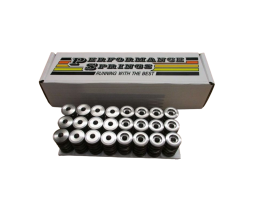
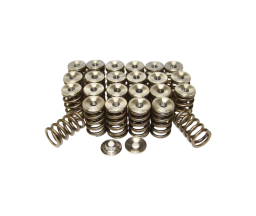
One of the most common and worthwhile upgrades inside a serious spring package is the Ti (titanium) valve spring retainer. In this article we’ll explain what titanium retainers are, why they’re beneficial, and when they make sense for your build. We’ll also note that Spool Imports offers a range of valve spring kits with Ti retainers from Performance Springs and Kelford Cams.
What Is a Valve Spring Retainer?
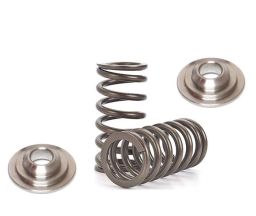
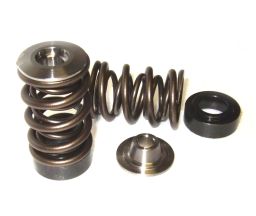
The valve spring retainer is the component that sits on top of the valve spring and works with the valve locks (collets) to secure the spring assembly to the valve stem. In simple terms, it’s the “cap” that keeps the spring loaded and ensures the valve returns to its seat after opening.
Retainers are commonly manufactured from hardened steel for durability. In performance applications, titanium is often used to reduce mass and improve valvetrain control.
What Are Titanium (Ti) Valve Spring Retainers?
Titanium retainers are retainers made from titanium alloy rather than steel. They are designed to provide the same functional job—retaining the valve spring and locking onto the valve stem—while significantly reducing the weight of the moving valvetrain assembly.
This matters because valvetrain mass directly affects how stable the engine remains as RPM rises. The higher the RPM, the more the spring must control and reverse the motion of the valve assembly. Reducing mass helps the spring do that job with less stress and more accuracy.
Why Titanium Retainers Are a Benefit
1) Reduced valvetrain mass improves valve control at RPM
One of the biggest enemies of a high-RPM engine is valve float—where the valvetrain can’t follow the cam profile accurately. When that happens, the valve may not seat properly, timing accuracy suffers, and in worst-case scenarios you can get piston-to-valve contact.
Because titanium retainers are lighter than steel, the spring has an easier job controlling the system. That typically translates into improved stability and better control when RPM climbs, particularly with aggressive cam profiles.
2) Less inertia can reduce required spring pressure (or increase safety margin)
Higher spring pressure can improve control, but it also increases load on cam lobes, followers, rockers, lifters, and guides. Reducing mass (via titanium retainers) can allow a well-matched spring package to achieve the control you need with less “brute force,” or at minimum increase the reliability margin at your intended RPM limit.
3) Improved response and accuracy with aggressive camshafts
Engines with higher lift, faster ramps, and more aggressive cam events place greater demands on the valvetrain. Titanium retainers help by reducing inertia, which supports more accurate following of the cam profile and reduces the chance of instability under high acceleration.
4) A proven motorsport-style upgrade
Titanium retainers have been used for years in motorsport and high-end performance builds for a reason: they address one of the core mechanical challenges of making power at RPM—keeping the valvetrain stable and repeatable.
When Does a Ti Retainer Upgrade Make Sense?
Titanium retainers are most beneficial when any of the following apply:
- You are increasing the engine’s RPM limit
- You are running a more aggressive cam profile (lift and/or ramp rate)
- You want improved valve control and reliability for track use
- You are addressing a known valvetrain stability limitation in your platform
- You are building a head once and want a high-quality spring package from the outset
For mild street builds on a stock cam and stock RPM, titanium retainers may not be strictly necessary. But for performance engines where valve control is critical, they can be an excellent “smart insurance” component—especially when bundled correctly in a matched spring kit.
Important Considerations
Retainers must match the spring, locks, and valve stem
Retainers are not universal. The correct retainer depends on spring diameter, lock angle/type, valve stem diameter, and installed height targets. Always treat the retainer as part of a complete system.
Installed height and pressures still matter
Titanium retainers help, but they don’t replace correct setup. Installed height, coil bind clearance, seat/open pressure, and guide/seal clearance remain essential checks in every build.
Quality matters
In critical valvetrain components, metallurgy, machining accuracy, and correct pairing with locks are everything. This is why we recommend choosing complete kits from reputable performance valvetrain brands rather than mixing unknown components.
Spool Imports: Valve Spring Kits with Ti Retainers
Spool Imports carries a range of valve spring kits that include titanium retainers from trusted performance brands including:
- Performance Springs (valve spring kits with Ti retainers)
- Kelford Cams (valve spring kits with Ti retainers)
If you tell us your engine, current setup, intended RPM limit, and camshaft specs (or planned cam), we can help point you toward a spring kit that suits the application and avoids common fitment and setup mistakes.
FAQs
What is a titanium valve spring retainer?
A titanium valve spring retainer is the component that sits on top of the valve spring and locks onto the valve stem via collets/locks, made from titanium alloy rather than steel to reduce valvetrain mass.
What are the benefits of Ti retainers over steel retainers?
The key advantage is reduced mass, which improves valve control at high RPM, can increase valvetrain stability with aggressive cams, and can improve reliability margin against valve float.
Do titanium retainers add power?
They generally don’t “add power” directly like a turbo or camshaft might. Instead, they help the engine safely operate at higher RPM and maintain accurate valve control, which supports power production and reliability in performance builds.
Are titanium retainers necessary for a street engine?
Not always. For stock RPM and mild cams, steel retainers can be perfectly adequate. Titanium retainers become more valuable as RPM and cam aggressiveness increase, or when the engine will see repeated high-load use.
Can I fit titanium retainers to any valve springs?
Retainers must match the spring dimensions, lock type/angle, valve stem diameter, and installed height requirements. The safest approach is using a complete matched spring kit from a reputable brand.
Does Spool Imports sell valve spring kits with titanium retainers?
Yes. Spool Imports offers a range of valve spring kits with Ti retainers from Performance Springs and Kelford Cams. Contact us with your engine details and goals and we’ll help match the right kit to your application.