
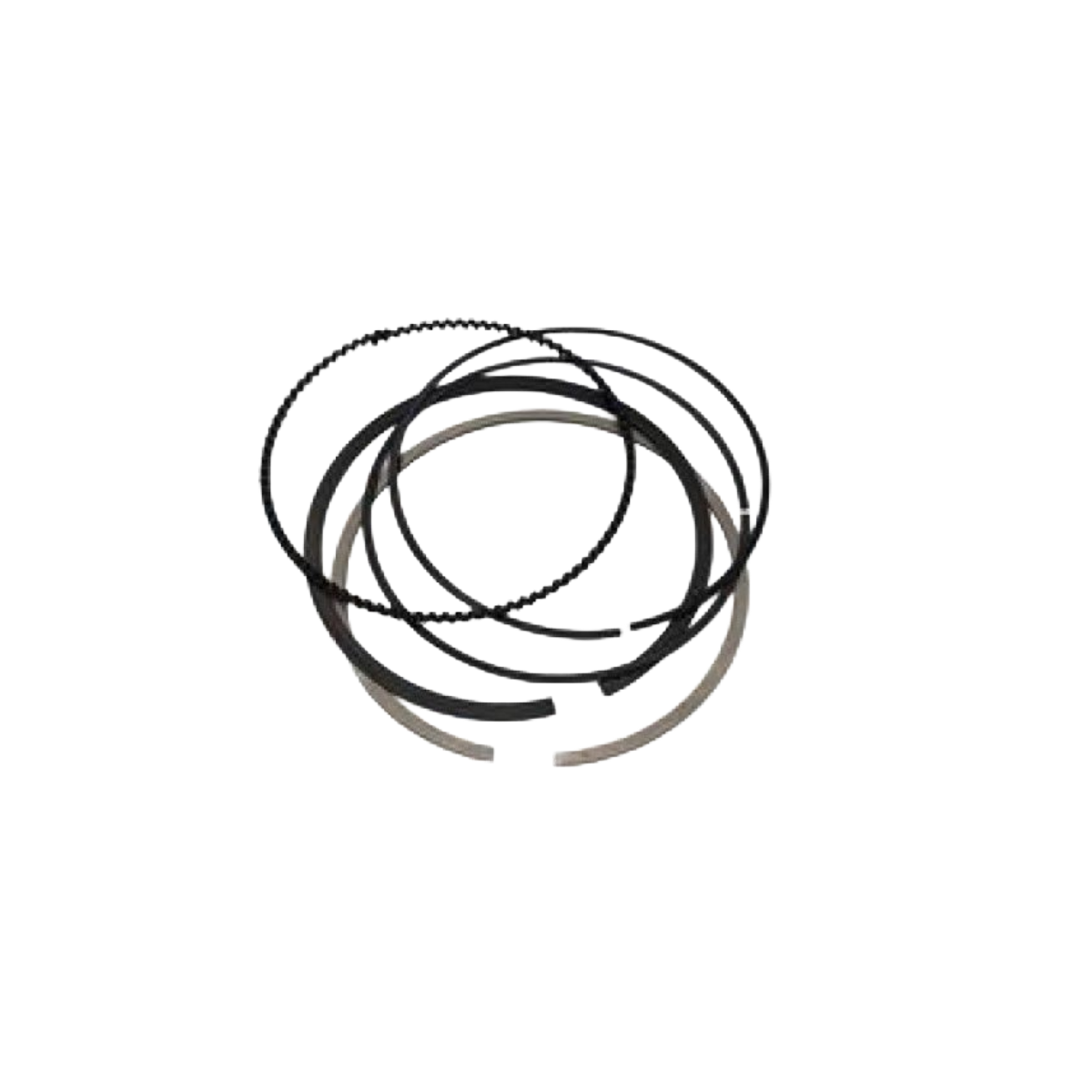
If you need replacement rings for CP pistons, start with the piston part number and the finished bore size. Ordering a set because it suits the same engine, or because the bore diameter looks right, can leave you with rings that do not fit the pistons.
The aim is to identify the ring package the piston was made for. That means matching the grooves as well as the cylinder, then having the builder establish whether the used pistons and bores are suitable for another assembly. It is worth sorting this out before the block is finished or a ring is filed.
Find the piston details before choosing rings
Keep the original piston box, invoice and specification sheet if you have them. Photograph the labels and every marking on the piston, including the underside, rather than sending only an engine code. Include any piston part number, job number or old ring-set number exactly as it appears.
A clear photograph is more useful than guessing a faint character. If you cannot identify the markings, say so and include the measured bore and what you know about the build. A piston from a second-hand engine may not be the specification originally supplied for that engine.
Spool supplies CP-Carrillo pistons and conrods, including application-specific combinations. For replacement rings, contact Spool with the piston details before selecting the nearest-looking set. Identification comes first; the available replacement can then be checked against that information.
The bore is only one part of the fit
The ring needs to suit the finished cylinder diameter, but it also has to fit its groove in the piston. Ring thickness is the dimension between its upper and lower faces. Radial depth is the distance from its inner edge to the face that runs against the bore. They describe different parts of the fit.
Matching one dimension does not establish the other. Nor does it establish the ring material, face design or oil-ring arrangement. CP's ring specification catalogue lists different top, second and oil-ring combinations, rather than one universal ring set.
Have the builder compare the identified ring specification with the actual pistons. Do not modify a piston groove to make an unmatched ring fit. If the original specification is uncertain, resolve it before machining or assembly.
What the CPN dimensions tell you
Spool's CPN-RING listing specifies a 1.0 mm top ring, 1.2 mm second ring and 2.8 mm oil-ring package. It is sold per cylinder. Those details describe that listing; they do not mean it fits every CP piston with the same bore.
For example, needing rings for six cylinders is a separate question from finding the correct ring specification. Establish both before ordering. Keep the full part number and any suffix when comparing packages, because a shortened description can leave out a meaningful difference.
Inspect used pistons before buying a new set
A fresh set of rings does not restore a worn piston groove. The engine builder needs to assess groove condition, ring clearance and the cylinder's condition as part of deciding whether the existing pistons can be reused.
If the engine is being bored larger, that changes the decision too. Do not buy rings around the old bore size while the machine shop is still deciding the finished size. Agree the machining and piston plan first, then order the matching rings.
Correct rings still need correct fitting
Identifying the right set is not the same as setting its end gap. The gap is measured with the ring square in its intended cylinder, and the required value comes from the instructions for that ring package and application.
CP's piston and ring installation sheet is a general reference dated November 2013, covering fitting and bore preparation. Use the instructions supplied for the actual parts if they differ from a general reference. There is no single gap or honing specification to transfer to every CP ring set.
Our ring-gap guide explains that next step. Establish the replacement part first, then deal with gap, orientation and final assembly.
What to include in your enquiry
- Piston part number, job number and photographs of all markings.
- Original box or specification sheet, and the old ring-set number if available.
- Engine details, bore material or coating, and the measured or planned finished bore, with units.
- Whether the pistons are new or used, and any inspection findings from the builder.
- Number of cylinders needing rings and the intended use of the engine.
That gives the parts discussion a useful starting point without assuming that an engine name or bore measurement proves the fit.
Frequently asked questions
Can I order replacement rings by bore size alone?
No. The rings must also match the piston grooves and the specified ring design. Start with the piston and ring part numbers, then confirm the finished bore.
Does one CP ring set cover the whole engine?
Not necessarily. Spool's CPN-RING listing is sold per cylinder. Confirm both the ring specification and the number of cylinders covered before ordering.
Can I use factory replacement rings in CP forged pistons?
Do not assume they fit. Identify the ring set specified for the actual CP piston rather than ordering from the original engine application.
Will new rings fix worn piston grooves?
No. Have the piston grooves and bores inspected before buying rings for a rebuild. New rings cannot restore damaged or worn piston dimensions.

