How to Remove Valve Springs Without Removing the Head
How to Remove Valve Springs Without Removing the Head
If you’ve ever looked at a valve spring job and thought “welp, guess the head is coming off” — good news. In many cases, you can remove and replace valve springs with the cylinder head still on the engine.
It’s a job that used to feel like “engine shop only” territory… mostly because the tools were always a compromise. Universal compressors kind of work, but in a tight engine bay they can turn into a frustrating mess fast.
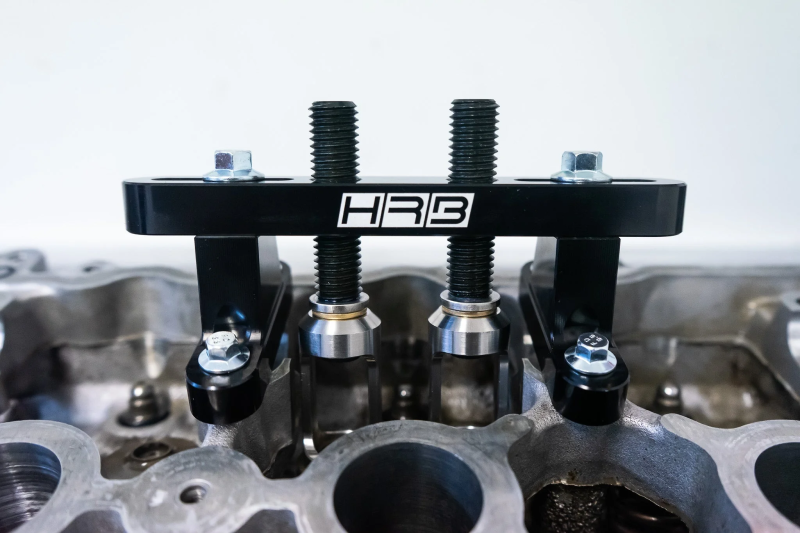
That’s why we’re pumped to announce that Spool is now an official dealer for HRB Tools — including their engine-specific in-car valve spring compressors. These are compact, strong, and actually fit the engine you’re working on. No guessing. No tool gymnastics. No sketchy setups.
Can You Really Remove Valve Springs Without Taking the Head Off?
Yes — and it’s a common method used by professional engine builders. With the correct approach, you can compress the valve spring, remove the keepers, and swap springs (or seals) without dropping the valve into the cylinder.
The key is simple: you need a reliable way to keep the valve seated while the spring is removed.
Tools You’ll Need
- In-car valve spring compressor tool (HRB makes engine-specific versions for JZ, RB, B & K series, 4G, GR, and more)
- Compressed air + spark plug adaptor or the valve-holding rope method
- Magnet or tweezers (for grabbing valve keepers/collets)
- Torque wrench for reassembly
- Good lighting (seriously — it makes this job 10x easier)
Step-by-Step: How to Remove Valve Springs In-Car
1) Keep the Valve From Dropping
Before you touch the spring, you need to stop the valve from falling into the cylinder when the retainer comes off. There are two proven ways to do this:
Option A: Compressed Air
- Thread a spark plug air adaptor into the cylinder you’re working on
- Hook up your air compressor (aim for 90–120 psi)
- Keep air flowing — valves can leak slightly, so steady pressure matters
Option B: The Rope Trick
- Bring the piston down near bottom dead center
- Feed clean nylon rope into the spark plug hole
- Slowly rotate the crank until the piston gently traps the valve against the rope
It’s low-tech, but it works extremely well when done correctly.
2) Remove What’s in the Way
Depending on the engine, you may need to remove rocker arms or even the camshaft to access the springs. Some engines are friendly. Some are… not.
Either way, take your time and keep everything organized. If you’re doing multiple springs, a valve train organizer tray is a lifesaver.
3) Compress the Valve Spring
This is where the right tool makes all the difference. Install your in-car valve spring compressor and compress the spring just enough to free the keepers.
With the HRB compressor design, you get a much better view of the retainer area thanks to the cutaway in the cup — which makes keeper removal way less painful.
Once the spring is compressed:
- Use a magnet or tweezers to remove the keepers (collets)
- Do this carefully — dropping one into the engine bay is a rite of passage, but we don’t recommend it
4) Remove the Spring and Retainer
Once the keepers are out, slowly release the compressor and remove the spring and retainer.
At this point you can:
- Replace valve springs
- Replace valve stem seals
- Inspect retainers and hardware
5) Install the New Spring
Install the new spring and retainer, compress it again, and reinstall the keepers. This step can be a little fiddly — but with a proper compressor it’s completely manageable.
Once the keepers are seated:
- Release spring pressure slowly
- Confirm the keepers are fully seated and locked in
6) Rinse and Repeat
Move on to the next valve and repeat the process. If you keep your workspace clean and stay organized, you’ll get into a rhythm pretty quickly.
Tips for a Smooth Valve Spring Job
- Use an inspection light or headlamp
- Telescoping magnets save keepers (and sanity)
- Take reference photos before disassembly
- Label components if you’re removing rockers or cams
What If the Head Is Already Off?
If the head is already removed, you’ll have more access and can use a traditional bench-style compressor. But for in-car work, the engine-specific compressors are what really make the job fast and repeatable.
Why the Right Valve Spring Compressor Matters
Valve spring swaps used to be one of those jobs that everyone dreaded — especially in tight bays or when time mattered. The problem wasn’t the process… it was the tools.
Universal compressors are always a compromise, and that compromise usually shows up as:
- Awkward angles
- Limited access to keepers
- Slipping tools
- Extra time and frustration
That’s why we’re excited to carry the HRB in-car valve spring compressor lineup at Spool. They’re built for specific engines, designed to fit properly, and made to do this job the right way.
FAQ
Can you really change valve springs without removing the head?
Yes. With an in-car valve spring compressor and either compressed air or the rope method, you can safely remove and replace valve springs without pulling the cylinder head. It’s a standard method in professional engine shops.
Is this method safe?
It is — as long as you take your time and use a properly designed compressor tool. The biggest risk comes from rushing or using a universal compressor that doesn’t fit well.
What kind of tool do I need?
Ideally, you want an engine-specific in-car valve spring compressor. HRB makes versions for common performance platforms like Toyota JZ, Nissan RB, Honda B and K series, Mitsubishi 4G, and the GR platform.
What’s the rope trick and does it really work?
Yes, it works great. Feed clean nylon rope into the cylinder with the piston near bottom dead center, then slowly turn the crank to trap the valve against the rope. It prevents the valve from dropping.
Can I do this job without an air compressor?
Yes — the rope method is the alternative. Compressed air is usually faster, but rope works extremely well if done properly.
Is this worth doing myself or should I take it to a shop?
If you’re comfortable with basic to intermediate engine work and you have the right tools, this is a very doable DIY job — especially for spring upgrades, valve seal replacement, or a top-end refresh.
Why use the HRB compressor instead of a universal one?
Universal tools are always a compromise. HRB tools are designed for specific engines, compact enough for tight bays, and built with features that make keeper access easier and the process more repeatable.
Need the right HRB tool for your engine?
Spool is now an official HRB dealer — reach out and we’ll help you get the correct setup for your platform.