BMW N54 Tuning Guide: When to Upgrade to Forged Conrods
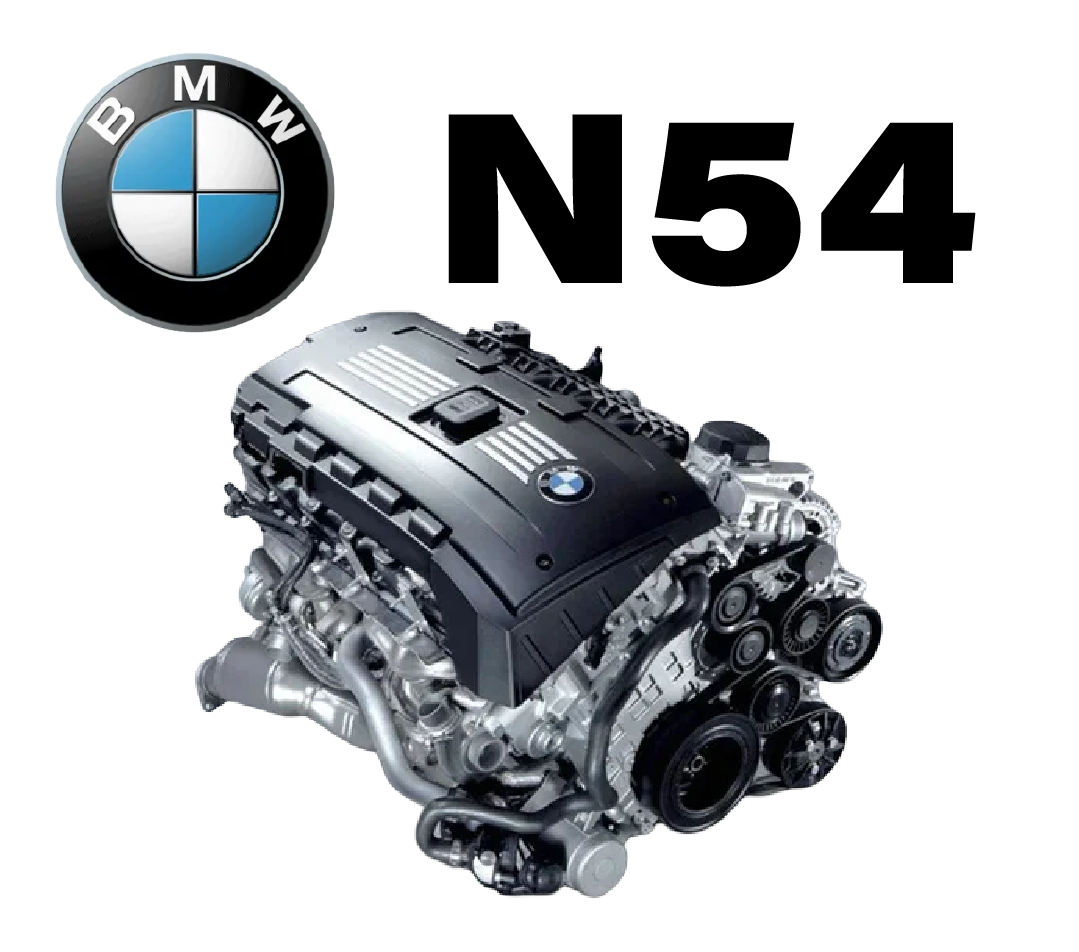
BMW's twin-turbo N54 has earned a reputation as one of the most tunable European performance engines of its generation. A capable factory engine, strong aftermarket support and a well-understood upgrade path have made it a favourite for everything from responsive street cars to serious drag builds.
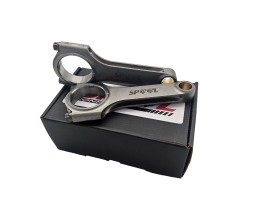
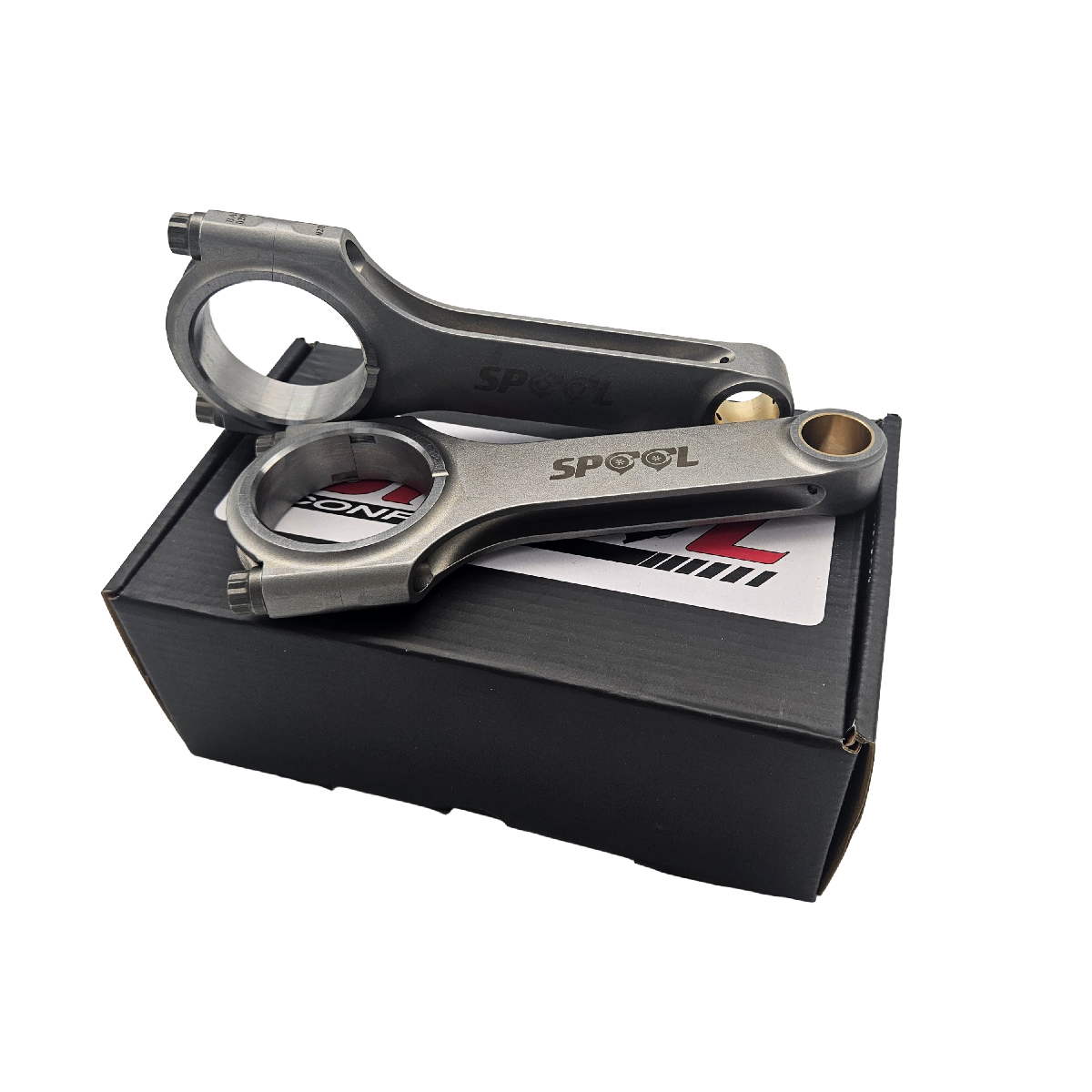
Spool has now developed a forged H-beam conrod for the BMW N54. It is designed as a direct-fit upgrade for engine builders who have reached the point where relying on ageing factory connecting rods is no longer appropriate for the intended power, torque or use.
This guide explains why the N54 responds so well to tuning, the supporting systems that need attention as power increases, and when forged conrods should become part of the build plan.
What is the BMW N54 engine?
The N54B30 is a 2,979 cc, 24-valve inline-six with direct fuel injection, dual VANOS variable camshaft timing and two small turbochargers. BMW introduced the engine in the mid-2000s, with the 335i producing 225 kW (306 hp) and 400 Nm in its original European specification.
Each turbocharger supplies three cylinders. Their relatively small size helps the engine develop boost quickly, while the broad factory torque curve gives the N54 the responsive character for which it became known.
| Configuration | Inline six-cylinder, DOHC, 24 valves |
|---|---|
| Displacement | 2,979 cc |
| Bore | 84.0 mm |
| Stroke | 89.6 mm |
| Compression ratio | 10.2:1 |
| Induction | Twin turbochargers |
| Fuel system | High-pressure direct injection |
| Factory 335i output | 225 kW (306 hp) and 400 Nm |
Which BMW models use the N54?
The exact application and production dates vary by market, but the N54 was used in several desirable BMW and Alpina models, including:
- BMW 135i
- BMW 1 Series M Coupé
- BMW 335i and 335is
- BMW 535i
- BMW 740i
- BMW X6 xDrive35i
- BMW Z4 sDrive35i and sDrive35is
- Selected Alpina B3 models
Before ordering engine components, always confirm the engine code and measure the relevant components during disassembly. Model names alone should not be used to identify internal engine parts.
Why is the BMW N54 so tunable?
The N54 combines several qualities that make it an excellent tuning platform.
Turbocharged from the factory
A turbocharged engine gives the tuner considerable control over airflow and torque. On a mechanically healthy N54, recalibrating boost, ignition and fuelling can produce a noticeable improvement without opening the engine. As with any platform, the calibration must suit the fuel, modifications and intended use.
Three-litre inline-six capacity
The N54's 3.0-litre displacement helps it produce strong torque and provides good response with either upgraded twins or a correctly sized single turbo. That makes it possible to build a fast street car without choosing an excessively large turbocharger.
Strong aftermarket support
The N54 upgrade path is now well established. Intercoolers, charge pipes, turbo systems, fuel-system components, engine-management solutions and forged engine parts are readily available. Builders can therefore match the combination to a realistic target rather than experimenting with unrelated components.
A capable factory bottom end
Many N54s have produced impressive results with unopened engines. That does not create a universal “safe” power limit, however. Engine condition, torque delivery, detonation control, fuel quality, heat, mileage and operating use can matter as much as the peak dyno figure.
A sensible BMW N54 tuning path
It is tempting to select a turbo and chase a headline power number, but a dependable N54 build starts with condition, data and a complete system. The stages below are a practical framework rather than a promise of a particular output.
| Build stage | Typical focus | What matters most |
|---|---|---|
| Healthy standard engine | Maintenance, diagnostics and baseline testing | Compression, leak-down, fuel pressure, cooling system, ignition and boost control |
| Software and bolt-ons | ECU calibration, intercooler, charge pipe, intake and exhaust flow | A conservative tune matched to the fuel and actual hardware |
| Upgraded turbo system | Upgraded twins or a single turbo, improved fuelling and boost control | Fuel supply, charge temperature, crankcase ventilation, drivetrain and repeatable data logging |
| Built engine | Forged conrods and pistons, bearings, fasteners and measured clearances | A coordinated machining, assembly and tuning plan for the intended torque and use |
Start with engine health, not boost pressure
Most N54-powered cars are now well over a decade old. Before adding boost, establish whether the engine and its supporting systems are healthy. A pre-tuning inspection should include:
- Diagnostic scan and review of stored faults
- Compression and leak-down testing where appropriate
- Low- and high-pressure fuel-system performance
- Injector condition and correct calibration
- Spark plugs and ignition coils
- Cooling-system condition, including the electric water pump
- Oil leaks and crankcase ventilation
- Turbocharger, wastegate and boost-control condition
- Intake-valve carbon accumulation
- Charge-pipe, intercooler and vacuum-system leaks
A larger turbo cannot correct a weak fuel system, poor ring seal or an existing cooling problem. Fixing the baseline first usually makes the final combination easier to tune and more consistent.
There is no single safe N54 power limit
Online discussions often assign a precise horsepower limit to the standard N54 bottom end. In practice, a dyno number alone tells only part of the story.
Connecting rods experience high cylinder pressure and inertial loading. A sharp torque rise at low engine speed can be particularly demanding, while detonation can damage an otherwise capable combination very quickly. A road car used for occasional acceleration runs also has a different duty cycle from a circuit car, roll-racing car or drag car making repeated passes.
The relevant question is therefore not simply, “How much power will standard N54 rods hold?” It is, “Is the complete engine appropriate for the intended torque curve, fuel, use and acceptable level of risk?”
When should you fit forged conrods to an N54?
Forged conrods become a sensible part of the plan when the engine is already being rebuilt, the intended combination moves well beyond the original operating envelope, or reliability under sustained high load matters more than retaining untouched factory internals.
Consider upgrading the connecting rods when:
- The engine is being rebuilt because of wear or damage
- A larger turbo system will substantially increase cylinder pressure and torque
- The car will see repeated drag, roll-racing or circuit use
- The tune will use ethanol blends or other fuels to support a much higher-output combination
- The target leaves little sensible margin for an old, unknown factory bottom end
- You want to avoid reopening the engine when the next stage of the build is added
Forged rods are not a substitute for correct machining, bearing clearances, fastener installation, oil supply or calibration. They are one part of a properly engineered short motor.
Introducing Spool BMW N54 H-beam conrods
The new Spool N54 conrod set gives BMW engine builders a direct-fit forged option without requiring machining to install the rods themselves. The H-beam design is manufactured from high-tensile 4340 forged steel and supplied as a weight-matched set.
Spool N54 conrod features
- High-tensile 4340 forged steel construction
- Two-piece forging
- HRC 36–42 hardness
- H-beam profile
- Dowelled caps for precise cap alignment
- Side oil squirters
- Quenched and heat treated
- Shot peened
- X-ray and sonic tested
- 100% magnetic-particle inspected
- Vacuum-degassed material to reduce impurities
- Weight matched within the set to ±1 gram
- ARP 2000 3/8-inch conrod fasteners fitted as standard
- Optional ARP L19 and Custom Age 625+ fasteners
- Direct fit for BMW N54 engines with no machining of the conrod required
Important: Engine bearings are not included. All dimensions, clearances and fastener procedures must be checked by the engine builder during trial assembly. Never assume a new component is ready to install without measurement.
Building the complete N54 combination
If the engine is being opened for forged rods, plan the rest of the short motor around its measured condition and intended use. Depending on the build, this may include forged pistons, performance bearings, fresh timing components, appropriate fasteners, cylinder-head sealing and improvements to oil control.
The fuel, turbo and engine-management systems must also be capable of supporting the target. High-power N54 combinations may require increased low-pressure fuel supply, supplementary port injection or another properly engineered fuelling strategy. The tuner must retain effective control of fuel pressure, air-fuel ratio, ignition timing, boost and torque.
Do not overlook the transmission, differential, axles, engine mounts, cooling, tyres and brakes. A dependable high-output BMW is a vehicle package, not just a dyno result.
BMW N54 conrod and tuning FAQs
Are BMW N54 factory conrods forged?
BMW technical material describes the N54 connecting rods as forged. That does not mean the standard rods have unlimited capacity or the same design, material control and fasteners as an aftermarket performance rod. Age, condition, torque, detonation and duty cycle all influence the risk.
How much power can a standard N54 handle?
There is no single guaranteed figure. Results vary with engine condition, turbo selection, torque delivery, fuel quality, calibration, temperature and vehicle use. Some unopened engines achieve impressive outputs, but another engine at a similar peak number may fail because its condition or operating circumstances are different.
Do I need forged conrods for an N54 turbo upgrade?
Not every turbo upgrade requires an engine rebuild. The decision should be based on the target torque, duty cycle, engine condition and acceptable risk. If the engine is already apart or the build is intended for sustained high output, forged rods are sensible insurance against having to repeat the labour later.
Are Spool N54 conrods a direct fit?
Yes. The Spool H-beam conrods are designed as a direct fit for BMW N54 engines, with no machining of the conrod required. The engine builder must still measure every critical dimension and clearance during assembly.
What conrod bolts are supplied with the Spool N54 rods?
ARP 2000 3/8-inch fasteners are standard. ARP L19 and Custom Age 625+ fasteners are available as upgrade options for builders whose application requires them.
Do the Spool N54 conrods include bearings?
No. Conrod bearings are not included and must be selected separately to achieve the required oil clearance for the measured crankshaft journals and housing bores.
Should I use upgraded pistons when fitting N54 conrods?
If the engine is being built for a high-output application, fitting rods and pistons together is usually the most logical approach. The final specification should be decided after inspection and measurement by the engine builder, taking the target compression ratio, bore condition, fuel and intended use into account.
Does an N54 need port injection for more power?
Not for every modified N54. As airflow and fuel demand increase, however, the factory direct-injection system may no longer provide the required capacity or operating margin. Supplementary port injection is one established solution, but it must be engineered and controlled correctly rather than added as a stand-alone shortcut.
Plan the N54 build around the intended use
The N54's appeal comes from its combination of response, torque and genuine tuning potential. It can deliver a substantial performance improvement with carefully chosen bolt-ons, while a properly built engine can support far more ambitious turbo and fuel-system combinations.
The best result comes from deciding how the car will be used, selecting a realistic target and building every supporting system to suit. If that plan includes opening the N54 bottom end, Spool's new forged H-beam conrods provide a strong, direct-fit foundation for the next stage.
General information only. Modified engines and vehicles require professional inspection, machining, assembly and calibration. Power figures can vary substantially between dynos and should not be treated as directly comparable.